
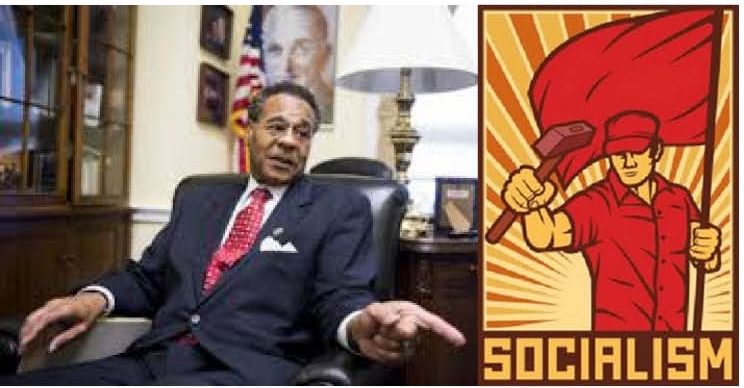
KANSAS CITY — Missouri Congressman Emanuel Cleaver II raised few eyebrows Friday when he cast a “nay” vote on a House resolution formally condemning the “horrors of socialism,” putting himself on record against a measure that focused broad bipartisan condemnation on a century of murder and human misery – and its apparent resurgence in the United States.
The vote — on a resolution cataloging the historic atrocities committed by socialist regimes and condemning the ideology in all its forms, passed the House easily. Cleaver, however, was one of the 98 Democrats siding with the minority opposition along with 27 who cast no vote (two voting “present,”) a move critics say reflects a deeper pattern of long-held left-leaning ideological commitments for Cleaver that increasingly puts him at odds with the more moderate voters of Missouri’s 5th Congressional District.
While the resolution itself was symbolic, Cleaver’s decision held symbolic weight of its own. Voting against a straightforward denunciation of socialism comes as national Democrats face growing pressure to distance themselves from the party’s far-left elements and their fondness for government expansion, entitlement growth, and regulation-heavy economic models – all while the Trump Administration battles a $34 trillion national debt. Even fellow Democrat Congresswoman Sharice Davids in the neighboring Kansas’ 3rd District – a default go-to supporter of President Joe Biden’s agenda and the state’s furthest left representative – voted in favor of the condemnation.
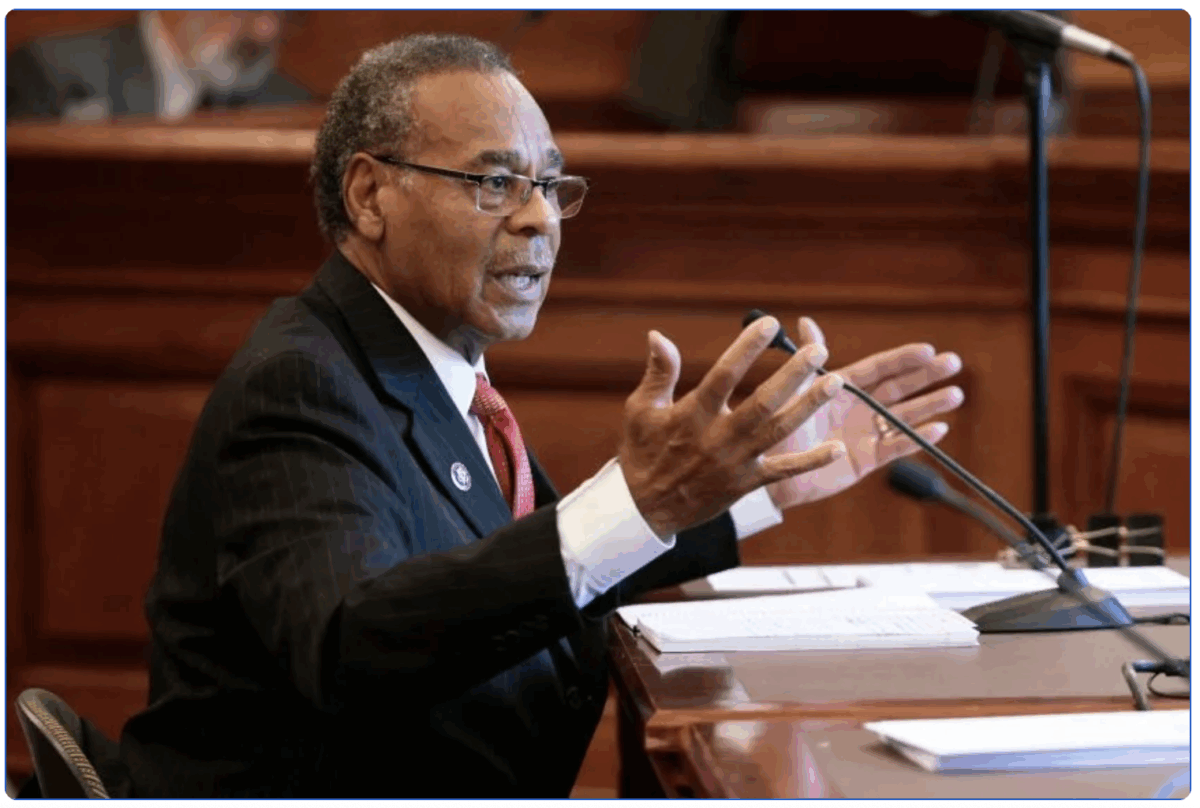
A telling “nay” vote?
Cleaver’s “nay” vote is consistent with a string of decisions in recent years that track closely with ultra-liberal priorities. He publicly rejected the bipartisan agreement to end the record-setting 43-day government shutdown because it failed to extend Affordable Care Act tax credits, arguing that the deal did not provide sufficient subsidies which analysts say have helped prime private health insurance premiums to a near 300% increase since Obamacare was adopted in 2010.. Even after weeks of closed federal offices and growing public frustration, Cleaver took a position that aligned squarely with the Democratic Party’s left flank.
The Kansas City Democrat has been a reliable vote for hiking federal allotments to social programs. According to disclosures from various voter-information groups, Cleaver supports expanding Social Security, Medicare, and other federal safety-net programs — positions that align with a broader preference for government-managed solutions over market-based approaches.
He’s locked arms with the environmental fringe of his party, fighting fossil fuel development and most recently opposing a Republican-led bill to expand domestic liquefied natural gas (LNG) exports. Proponents said the measure was aimed at strengthening U.S. energy production and reducing reliance on foreign suppliers. His vote matched with environmentalist interests that regularly advocate restricting or slowing traditional energy development in favor of more expensive, less efficient wind and solar options that require massive corporate tax subsidies to bring online.
Analyses of Cleaver’s voting history reveal votes with Democratic leadership at an exceptionally high rate — above 95 percent — and has supported presidential priorities virtually without exception. Critics argue this reflects a lack of independence and a tendency to follow the ideological drift of the Washington Democratic caucus, rather than the center-left pragmatism historically associated with Missouri Democrats.
Cleaver’s defenders often portray him as a steady hand from an urban district, but the cumulative effect of his votes paints a different picture: a lawmaker who has steadily moved leftward with the national party, even as his region wrestles with rising energy prices, economic uncertainty, and a cultural environment far more moderate than the rhetoric dominating the coasts.
The Kansas Informer contacted Cleaver’s office seeking a statement in explanation of his vote and have not yet received a reply.
Friday’s vote will likely become fodder in the next campaign cycle. Republicans see an opportunity to frame Cleaver as out of touch with mainstream Midwestern values, while even some centrist Democrats may question whether unwavering alignment with the party’s most progressive positions is sustainable in a district with shifting demographics and tightening political margins.

Dane Hicks is a graduate of the University of Missouri School of Journalism and the United States Marine Corps Officer Candidate School at Quantico, VA. He is the author of novels "The Skinning Tree" and "A Whisper For Help." As publisher of the Anderson County Review in Garnett, KS., he is a recipient of the Kansas Press Association's Boyd Community Service Award as well as more than 60 awards for excellence in news, editorial and photography.