

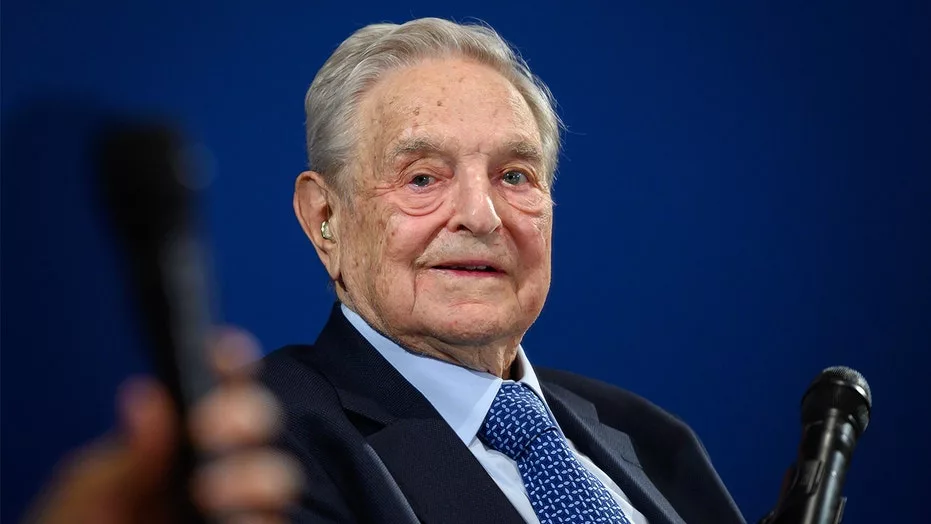
Left-leaning advocacy organizations active in Kansas elections and policy debates like Loud Light, Kansas Appleseed, and groups involved in multi-state election litigation—are receiving fewer direct grants from George Soros’ philanthropic network as the Open Society Foundations (OSF) undergo sweeping internal restructuring and shift their global spending priorities.
According to Kansas researcher Earl F. Glynn with WatchDogLab Substack, who annually compiles OSF’s IRS Form 990-based grant data, OSF’s publicly reported grants to U.S. civic-engagement and voter-mobilization groups declined sharply in 2024, part of a broader contraction affecting Kansas-linked organizations. Glynn’s May 2025 reporting traced Soros-connected dollars into Kansas election-law challenges, into nonprofits advocating extended mail-ballot deadlines, and into voter-turnout and “civic engagement” campaigns operating in the state.
In Kansas, Glynn’s research identified Soros-linked support for:
- Kansas Appleseed, which he reported was “using nutrition and public-health cover to push voter-turnout campaigns,”
- Loud Light, which has grown net assets past $1.3 million while receiving funds tied to national progressive networks, and
- Election-lawfare groups that participated in litigation to allow mail ballots to be counted for up to a week after Election Day.
These Kansas-connected groups appear in or adjacent to the same national funding networks now experiencing a contraction in OSF-disclosed grants. Soros’ OSF also contributed millions to the host of dark money progressive non-profits that make up the Arabella Advisors network. One Arabella string funded the startup of States Newsroom in 2018, the left-tilted online media organ predominantly targeting readers in Red States, including The Kansas Reflector.

Glynn’s research shows the organizations’ grantmaking fell sharply in 2024. Nationwide, OSF nonprofits issued 839 grants last year, down from 2,166 in 2023—a nearly 60% decrease. Based on the updated OSF online database analyzed by Glynn, total grant dollars fell from about $1.1 billion in 2023 to $670 million in 2024, a decline of roughly 40%.
The median OSF grant held steady at $250,000, which Glynn notes reflects a philosophical shift toward fewer, larger grants rather than the thousands of smaller awards that defined OSF’s approach in previous decades.
Restructuring and Layoffs Behind the Drop: Much of the downturn is attributed to OSF’s internal upheaval. In mid-2023, the foundation announced major changes to its operating model and confirmed deep staff reductions. The Associated Press reported that OSF planned to eliminate at least 40 percent of its global staff, with hundreds of layoffs concentrated in Europe and the United States. Philanthropy outlets including Inside Philanthropy described office closures, program shutdowns, and the consolidation of major initiatives.

OSF also admitted it paused new grantmaking for several months during the transition—an interruption confirmed by AP and OSF’s own public statements that new grants would not resume until February 2024.
Possible Financial Pressures Behind the Contraction: Several outside financial forces may also be contributing to OSF’s shrinking grant footprint. The Soros network’s philanthropic arms rely heavily on investment income from the family’s endowment, and recent market volatility has been severe. Bloomberg and Reuters reported that global equities and tech sectors fell sharply in 2022–23, while bond markets suffered their worst losses in decades as interest rates spiked—conditions that could reduce the investment returns available to OSF for annual grantmaking. At the same time, AP documented that global inflation has increased operational costs across the nonprofit sector, and The Guardian has reported that OSF faces higher compliance burdens due to a stronger U.S. dollar and increased cross-border regulatory scrutiny. OSF has also been restricted or expelled from several countries—including Hungary, Russia, Turkey, and Pakistan—according to reporting by Reuters and AP, which has significantly raised the cost and difficulty of its international work. These factors may have pushed OSF to cut staff, pause new grants, and consolidate programs, independent of ideological or strategic motives.
The Soros family’s internal financial posture may also play a role. The transition of OSF leadership from George Soros to his son Alex prompted a reassessment of liquidity and investment risk within the Soros family office—changes described by Politico and Bloomberg in their coverage of the leadership shift. As Soros Fund Management moved further toward a conservative, family-office model, Bloomberg reported that it reduced some higher-risk strategies, potentially limiting the flow of fresh capital into OSF. Additionally, OSF’s extensive restructuring—described by AP and Inside Philanthropy as involving a 40% staff cut and major program closures—likely increased internal compliance and transition costs, temporarily constraining spendable revenue. Taken together, these market-driven and organizational pressures provide another plausible explanation for why OSF’s publicly disclosed grantmaking has fallen so sharply, separate from any strategic redirect toward 2026 political activity.

Shift to “Big Bets” and Multi-Year Initiatives: OSF leaders say the transformation is designed to accelerate “big-bet” strategies—long-term, high-dollar commitments rather than thousands of single-year project grants. Analysts quoted by Inside Philanthropy argued that such a model is almost inevitable after slashing 40% of grant-processing staff.
The transition is visible in spending patterns: while the number of grants has dropped dramatically, the median grant amount has climbed steadily from about $85,000 in 2016 to $250,000 today. OSF has also announced major multi-year commitments, including a $400 million green-jobs initiative, widely reported by Politico and Devex.
Pivot Away from U.S. and Europe Toward the Global South: Another reason Kansas-linked groups may be seeing fewer grants is that OSF is shifting its geographic focus. Politico Europe and AP reporting in 2023–24 documented steep cuts to OSF’s Berlin and Brussels offices—up to 80% in some units—and the shutdown of entire European programs.
At the same time, OSF expanded initiatives in Africa, Latin America, and Southeast Asia, emphasizing “civic resilience,” environmental protection, and natural-resource governance. These new focal areas, reported by Devex in 2024, draw significant funding away from legacy U.S. advocacy organizations.
Political Activity Shifts to PACs and 501(c)(4)s: While philanthropic grantmaking has contracted, Soros-aligned political expenditures have not. Federal Election Commission filings and reporting from Politico show that the Open Society Policy Center, a Soros-controlled 501(c)(4), spent over $140 million on politically active grants in 2021 alone.
Meanwhile, Soros-family political activity is increasingly routed through Democracy PAC and Democracy PAC II, controlled by Soros’ son Alex. According to OpenSecrets and Politico, the PACs have transferred hundreds of millions of dollars to Democratic-aligned outside groups since 2020—funds that do not appear in OSF’s public grant database.
This shift means many progressive organizations—including those active in Kansas—are funded through political vehicles rather than OSF’s charitable arms.
Leadership Shift and International Pressures: Alex Soros, who became OSF board chair in late 2022, is expected to be more directly involved in U.S. electoral politics. Politico reported that Alex Soros intends to “be more politically active than his father,” particularly in defending Democratic control of the White House.
Global political pressures have also complicated OSF’s operations. OSF has been expelled from Hungary, restricted in Russia, Turkey, and Pakistan, and challenged in several Western nations. These developments—reported by AP, Reuters, and The Guardian—have pushed OSF toward more cautious, consolidated funding patterns.
For Kansas-linked advocacy and election-policy groups, the reduced number of OSF grants does not necessarily reflect an ideological retreat. Instead, it appears to be the product of major internal restructuring with possible financial underpinnings, a move toward fewer but larger grants, a geographic realignment, and a shift toward political PAC-driven funding rather than charitable grants.
The Soros network’s philanthropic footprint has shrunk—but its political influence, especially through Alex Soros’s PAC activity, remains significant though less visible in public nonprofit filings.