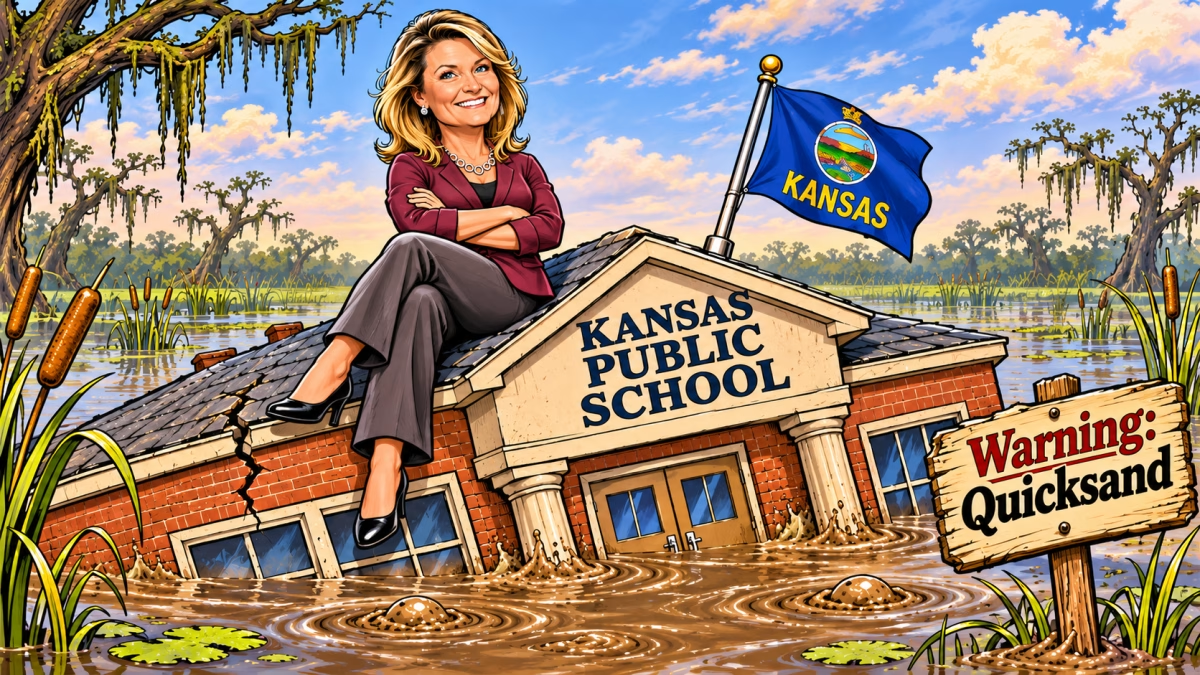
Funny-not-funny how the post-Democrat election surge collapse of the stock market last week reminds us of Kansas public education, and the tragic loss the outcome of the governor’s race will have for educating our kids.
Of course, the stock market will rebound because the underlying strength of the American economy will make it happen. Likewise, Kansas kids are smart enough to rebound as well, but not in a failed system that now has no chance of redemption by School Choice – allowing parents to take their students’ tax funding to use for private instruction and force public schools to compete.
Governor-elect Cindy Holscher’s win effectively preserved a political approach that treats money alone – not learning – as the central measure of commitment to students. The numbers explain why Holscher is such bad news.
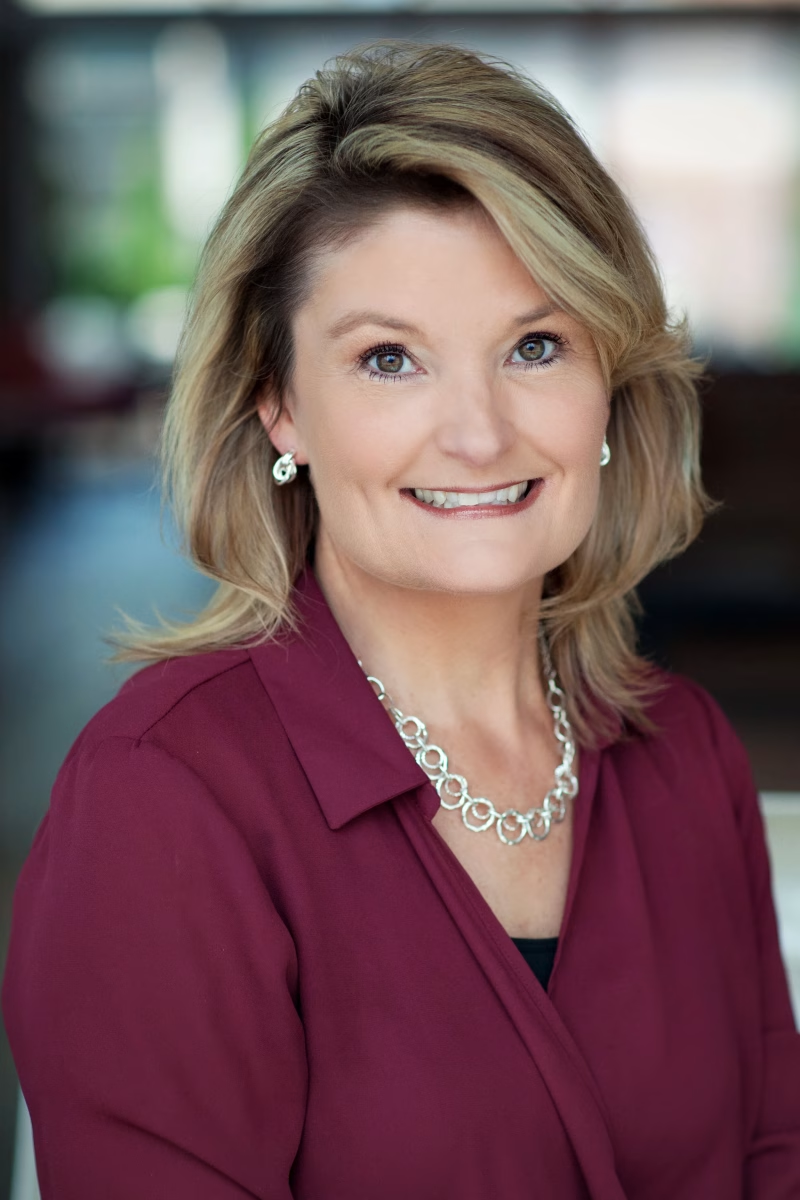
According to the Kansas State Department of Education, total spending per pupil rose from $14,085 in 2018–19 to $18,858 in 2024–25, approximately 34%. Those figures include expenses beyond classroom instruction and are not adjusted for inflation. But inflation does not explain the entire spending story: legislative auditors separately calculated that per-student spending increased 14% after inflation between 2017 and 2022.
The return, like all that red in last week’s stock market news, has been grim.
Kansas fourth-graders averaged 223 in reading on the National Assessment of Educational Progress in 2017. That fell to 219 before COVID in 2019, then to 213 in 2024. Eighth-grade mathematics fell from 282 in 2019 to 274 in 2024. COVID made a serious problem worse. It did not invent it.
Even Kansas’ attempt to lower standards didn’t paint a much brighter picture. In 2025, the state relaxed the thresholds used to classify students as proficient and got only a smidge better numbers in 2026. KSDE’s explanation to parents said the previous cut scores were “set too high.”
What a cop-out.
But Holscher and the KNEA don’t seem to care about whether kids actually learn; their definition of success is fluffing the traditional nest with more dollars. The Legislature’s own auditors supplied a warning in their 2023 education-cost study: “Across-the-board spending increases were associated with almost no increase in the percentage of students who met state standards.”
Holscher’s campaign advertised a promise to “Fully fund our public schools.” She declared her allegiance to failure in her Johnson County Post election questionnaire: “I oppose diverting taxpayer dollars to private school voucher programs.”
Really? Even when it works?
A 2019 Urban Institute study of Florida’s private school scholarship program found scholarship participants enrolled in college at 57%, versus 51% among comparable public-school students. A 2024 University of Colorado Denver study found improved reading achievement and math benefits in its program. The concept even works in Mississippi, long the bottom of the barrel for education, where more students in charter schools performed at or above grade level in English Language Arts (ELA) during the 2025–2026 school year than in the local district-run schools serving the same grade levels. [1, 2]
With a Republican-dominated legislature and Ty Masterson as governor, Kansas might have broken the spell of sub-mediocrity that has come to define our K-12 education system and moved Kansas kids into positions of prominence with a better shot at the life benefits good education can provide.
With Holscher, Kansas just invested in more failure.


