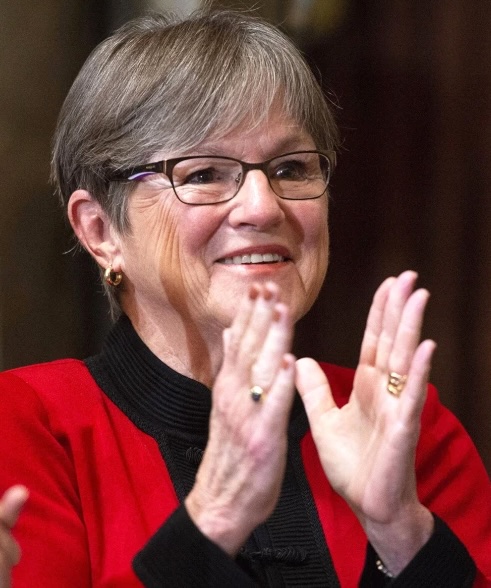
Kansas Gov. Laura Kelly entered office in 2019 promising stability in school finance and improvements in student outcomes. Instead, data from state agencies, national assessments, and legislative audits show that by measures running the gamut from achievement to attendance to staffing and even enrollment—Kansas public education has stagnated or declined during her tenure.
And it all happened as school spending reached historic highs.
NAEP scores now below the national average: Kansas’ results on the National Assessment of Educational Progress (NAEP) have slipped into the bottom half of U.S. states, according to analysis published by The Sentinel that reviewed the 2024 NAEP dataset. Kansas ranks between 29th and 44th depending on grade and subject, and proficiency rates for low-income students are particularly low—only 12% of low-income 8th-graders are proficient in math, and just 15% of low-income 4th-graders are proficient in reading.

State assessment trends also reflect limited progress. The Kansas State Department of Education (KSDE) and the Kansas Association of School Boards (KASB) report that state test scores dropped sharply during the pandemic and have only partially recovered. A 2024 KASB analysis shows statewide reading proficiency rising by just one point and math by two points compared with 2022 levels—still well below pre-COVID performance.
Post Covid, many kids just won’t go to school: One of the most persistent problems since 2020 has been student attendance. KSDE data summarized by KASB shows chronic absenteeism—defined as missing 10% or more of school days—was 14% before COVID, spiked to 24.5% in 2022, and remains at 19–22% statewide as of 2024. That means roughly one in five Kansas students continues to be chronically absent, years after schools returned to normal operations. On Kelly’s order, Kansas was the first state to shut down in-person instruction for the remainder of the 2020 school year. Kelly has since commented that she has “no apologies” for the shutdowns.
The state’s “postsecondary effective rate”—a KSDE metric that tracks graduates who pursue college or credentialing—has also slipped. KASB reports the rate peaked at 52% for the 2011–16 cohorts but has dropped back to 50% under the cohorts that graduated during Kelly’s tenure.
Teacher shortages and massive statewide turnover: Kansas’ well-documented teacher shortage has grown more severe during Kelly’s years in office. The Kansas Teacher Retention Initiative reported 1,628 teacher vacancies in 2022 and a 31% increase in teachers leaving the profession from 2020–21 to 2021–22. A briefing to the Kansas State Board of Education in 2024 cited over 2,200 open licensed positions for the 2024–25 school year, with special education facing the highest deficits.
At the same time, Kansas public universities report a 7.5% decline in teacher-education enrollment since 2015, according to the Kansas Board of Regents. The diminished pipeline has compounded retention problems in rural districts.
While classroom teacher numbers have declined alongside enrollment, the number of non-teacher staff has grown significantly, according to a staffing analysis by The Sentinel using KSDE data. The publication reported a 16% increase in non-teacher positions since the mid-2010s, even as academic results lagged. During Kelly’s tenure, it’s taken more paid, non-teaching staff to handle fewer students.
Enrollment decline strains rural districts: Kansas public school enrollment peaked at about 492,000 students in 2019–20, Kelly’s first year in office. By 2024–25, enrollment had fallen by about 15,300 students, according to a 2025 KASB demographic report. Declining birthrates and out-migration, particularly in rural counties, have placed pressure on small districts to consolidate while fixed operating costs remain high.
First to call it quits on classrooms: Kelly’s handling of schools during the pandemic remains one of the most consequential decisions of her tenure. On March 17, 2020, Kansas became the first state in the country to order all K-12 schools closed for the remainder of the school year, as reported by the Kansas City Star and Wichita Eagle. In July 2020, Kelly attempted to delay the start of the next school year through executive order until after Labor Day, but the Kansas State Board of Education rejected the order on a 5–5 vote.
Kelly has since defended her actions, telling reporters she had “no apologies” for the statewide shutdown. The learning loss that followed, reflected in state and national test results, remains a central point of criticism.
More money, less achievement: Total K-12 spending has risen dramatically during Kelly’s administration, driven by the Gannon funding settlement and federal COVID aid. A Kansas Policy Institute review of KSDE financial reports shows districts now spend over $18,000 per student, one of the highest figures in state history.
Despite this, student achievement has not meaningfully improved, absenteeism remains high, and teacher vacancies persist. Legislative audits and reporting by The Sentinel have also documented widespread misuse of at-risk education funding, which state law requires be directed to academically struggling students.
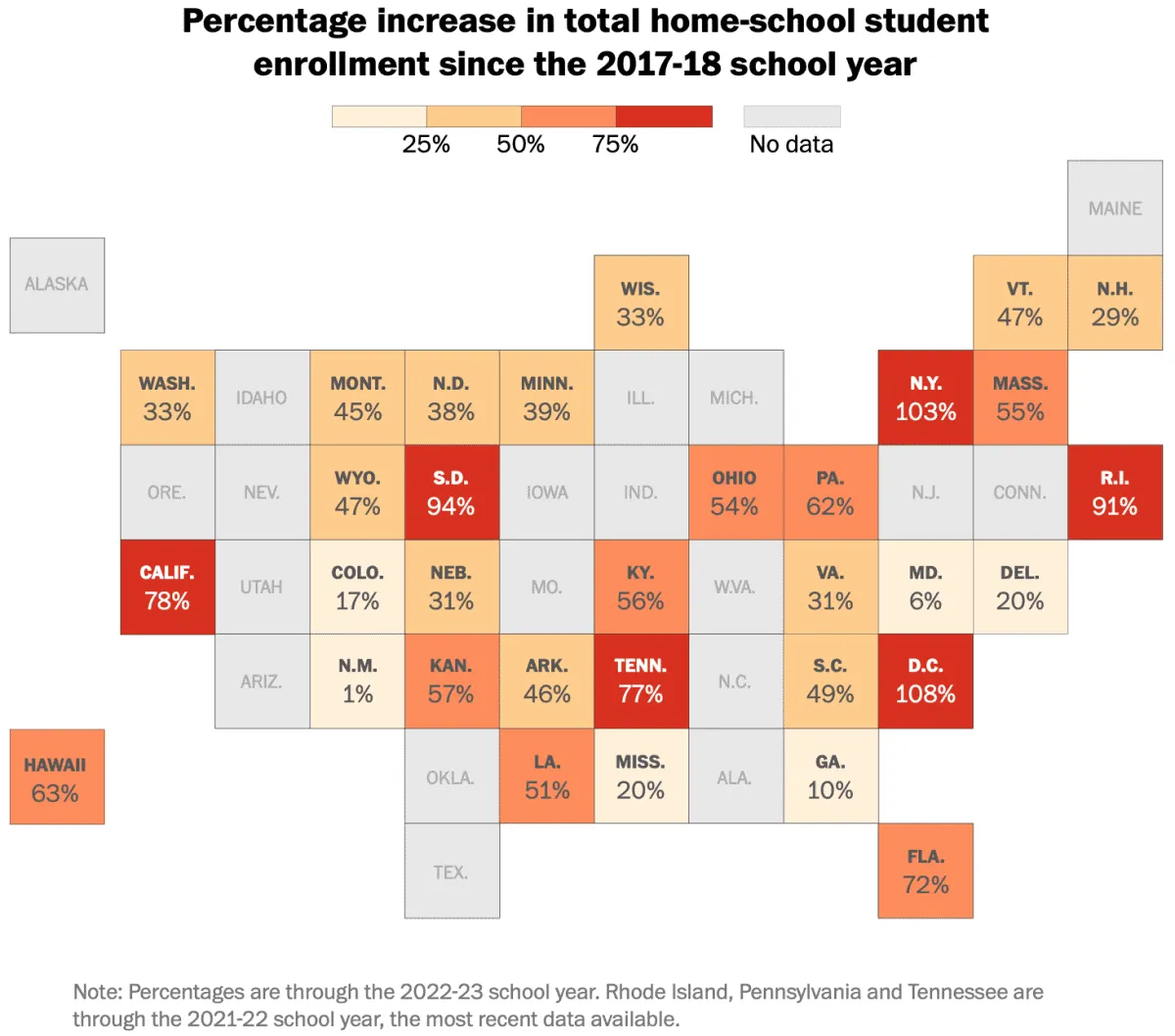
While public education faltered, Kelly pushed the status quo – money: As costs went up and enrollment and achievement declined in Kansas schools, Kelly continued to press for school funding increases and teacher pay hikes and opposed School Choice measures that would place tax payer dollars in the hands of parents to help pay private school tuition or homeschool costs. Homeschool growth in Kansas has been substantial, part of a broader shift toward alternative schooling since 2019 and especially since the pandemic. Reporting from The Washington Post that analyzed homeschooling Kansas and 31 other states showed a 57 percent increase in homeschooling in the Sunflower State since the 2017-2018 school year.
Though specifics of the figures aren’t completely clear one thing is certain: between the declining number of families with school-age children living in Kansas and those who live here but choose for whatever reason not to send their children to public school, classrooms are emptying under Gov. Kelly’s watch.
While many of the forces affecting Kansas education—including demographic change, teacher pipeline issues, and national learning loss trends—are not unique to the state, the period since 2019 shows clear evidence of declining or stagnating outcomes in multiple categories under Gov. Laura Kelly’s leadership. As Kelly prepares to leave office next year and with additional dollars having been pumped into the system each year, nothing seems to be getting any better.
Kelly continues to defend her education record, emphasizing funding stability and support for public schools. But the data from KSDE, KASB, NAEP, the Kansas Board of Regents, the Kansas Teacher Retention Initiative, and investigative outlets including The Sentinel show a system struggling to regain its footing seven years into her governorship.

Dane Hicks is a graduate of the University of Missouri School of Journalism and the United States Marine Corps Officer Candidate School at Quantico, VA. He is the author of novels "The Skinning Tree" and "A Whisper For Help." As publisher of the Anderson County Review in Garnett, KS., he is a recipient of the Kansas Press Association's Boyd Community Service Award as well as more than 60 awards for excellence in news, editorial and photography.