

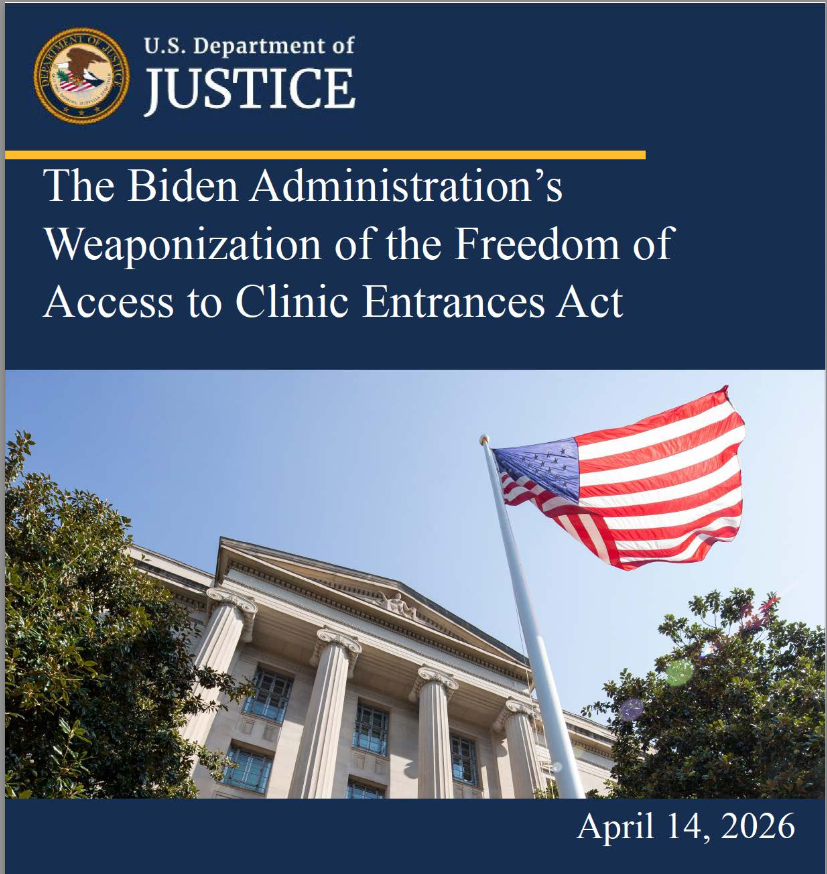
WASHINGTON, D.C. – A sweeping new Department of Justice report released Monday outlines how abortion NGOs fed intel to the Biden Department of Justice on Kansas pro-life activities, following a nationwide surveillance scheme persecuting and sometimes jailing pro-life activists for exercising their First Amendment rights until they were pardoned under the Trump Administration.
The heavily redacted report draws mainly on email correspondence between Biden DOJ offiials and pro-abortion organizations and leadership. It summarily accuses the Biden Administration of systematically weaponizing the Freedom of Access to Clinic Entrances (FACE) Act — a law designed to protect both abortion clinics and pregnancy resource centers — by partnering closely with abortion-rights groups while largely ignoring violence against pro-life facilities and houses of worship.
The 882-page document, titled “The Biden Administration’s Weaponization of the Freedom of Access to Clinic Entrances Act,” was prepared by the Trump-era Office of Legal Policy in response to President Trump’s January 2025 pardons of peaceful pro-life defendants and directives to root out anti-Christian bias.
The report outlines how even in solidly red-state Kansas, abortion NGOs such as the National Abortion Federation (NAF) and Planned Parenthood compiled intelligence on local pro-life events and fed it directly to the Biden DOJ’s National Task Force on Violence Against Reproductive Health Care Providers. Internal records cited in the report show NAF security teams monitoring the annual March for Life rally in Topeka, listing it alongside events in other cities as potential flashpoints. A separate Planned Parenthood “Safety and Security” advisory flagged “Operation Save Kansas City” — the local chapter of the national pro-life group Operation Save America — as part of a pattern of “trespass/blockade” tactics that the NGOs urged federal prosecutors to target under the FACE Act.
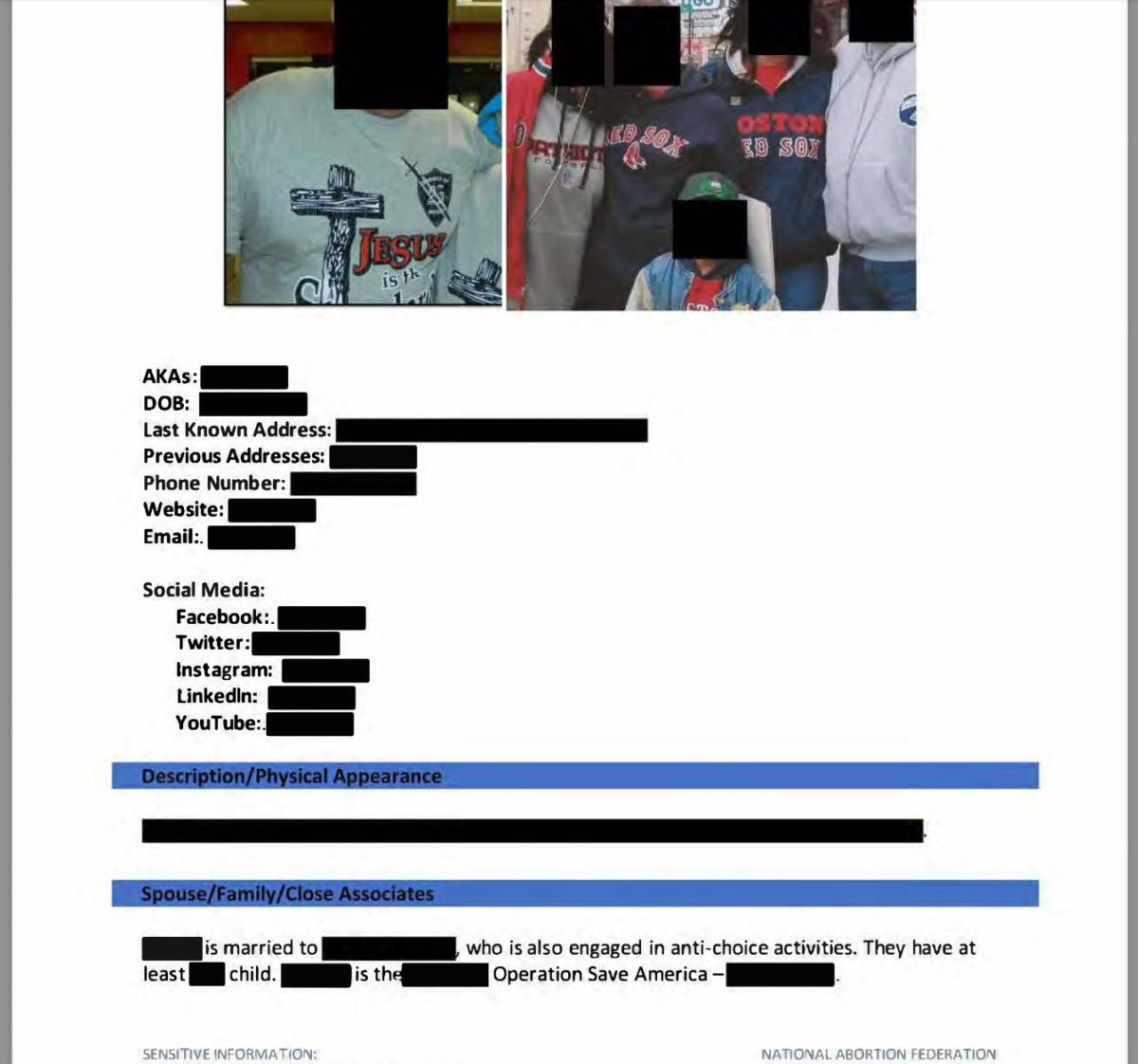
These Kansas references, though brief, exemplify the report’s broader findings: abortion advocacy organizations acted as an unofficial extension of the Justice Department, supplying real-time protest schedules, social-media posts, photographs (including of spouses and minor children), home addresses, and even drivers’ license numbers on pro-life activists. The DOJ Task Force, led by career attorneys in the Civil Rights Division, welcomed the information, described NAF’s security director as an “MVP,” and used it to open investigations — often before local law enforcement responded.
Key findings in the report paint a picture of one-sided enforcement:
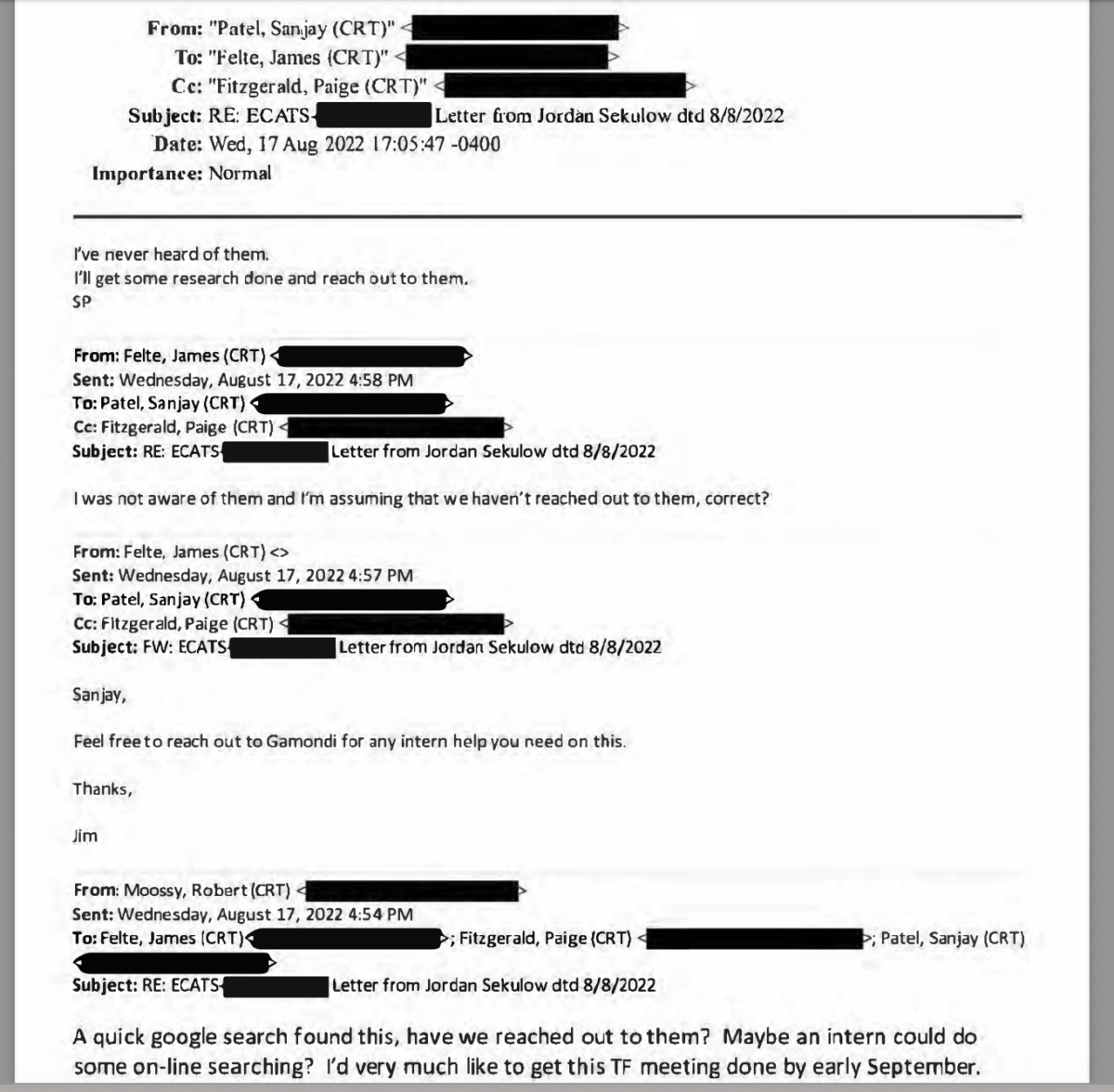
- Ignored pro-life victims, courted abortion NGOs. While pregnancy resource centers and churches faced firebombings and vandalism after the 2022 Dobbs decision, the Task Force delayed outreach to pro-life groups until September 2022 and internally debated whether such facilities even qualified for FACE Act protection. In contrast, Task Force Director Sanjay Patel maintained near-constant contact with NAF, Planned Parenthood, and the Feminist Majority Foundation. NGOs provided “dossiers” on activists and received internal DOJ data in return, including lists of active FACE Act cases and terms of release for defendants.
- Surveillance of First Amendment activity. The report documents how the Task Force affirmatively asked abortion groups for travel and protest details on pro-life Americans. In one case, NGOs complained repeatedly about a single activist; after her conviction and lengthy sentence, the complaints stopped. FBI officials flagged that some NGO tips tracked “1st Amendment protected activity,” yet the Task Force continued the coordination.
- Inappropriate prosecutorial conduct. Three case studies highlight alleged misconduct:
- United States v. Gallagher (Middle District of Tennessee): Prosecutors told defense lawyers they did not keep historical FACE Act prosecution data needed for a selective-prosecution defense — even though Patel had compiled and shared nearly identical spreadsheets with NAF months earlier.
- United States v. Zastrow (Eastern District of Michigan): Assistant U.S. Attorneys screened jurors for conservative or religious views, referred to Christian beliefs as “culty,” and complained about a “very Catholic” magistrate judge protecting defendants’ First Amendment rights.
- United States v. Houck (Eastern District of Pennsylvania): Sixteen FBI agents arrested a father at home after his minor son was attacked by a clinic escort; the jury acquitted him. The Task Force later tried to blame the FBI for the optics.
- Charging and sentencing disparities. Biden DOJ prosecutors sought an average 26.8 months imprisonment for pro-life defendants versus 12.3 months for the few pro-choice defendants charged. Final sentences averaged 14 months for pro-life defendants and just 3 months for pro-choice ones. The report notes pro-life cases were pursued near the top of sentencing guidelines, while pro-abortion violence drew leniency.
- Conflict-of-interest grants. Patel agreed to serve as a reference on NAF’s application for a large private grant — an apparent ethics violation for which no approval records were found.
Upon taking office, President Trump issued full pardons to numerous pro-life defendants in January 2025. The new DOJ has dismissed three related civil FACE Act lawsuits with prejudice and issued a January 2025 charging policy directing prosecutors to bring FACE Act cases only in “extraordinary circumstances” or those with significant aggravating factors. The report states that internal misconduct referrals have been made where appropriate, but emphasizes the review focused on systemic patterns rather than individual disciplinary outcomes.
The FACE Act, passed in 1994 after clinic violence including the 1993 shooting of Dr. George Tiller outside his Wichita, Kansas, facility, was intended to be viewpoint-neutral. The new report concludes the Biden DOJ enforced it as a one-way ratchet.
A spokesperson for the former Biden Justice Department did not immediately respond to requests for comment. The full report, including hundreds of pages of internal emails and NGO intelligence documents, is available on the DOJ website.