

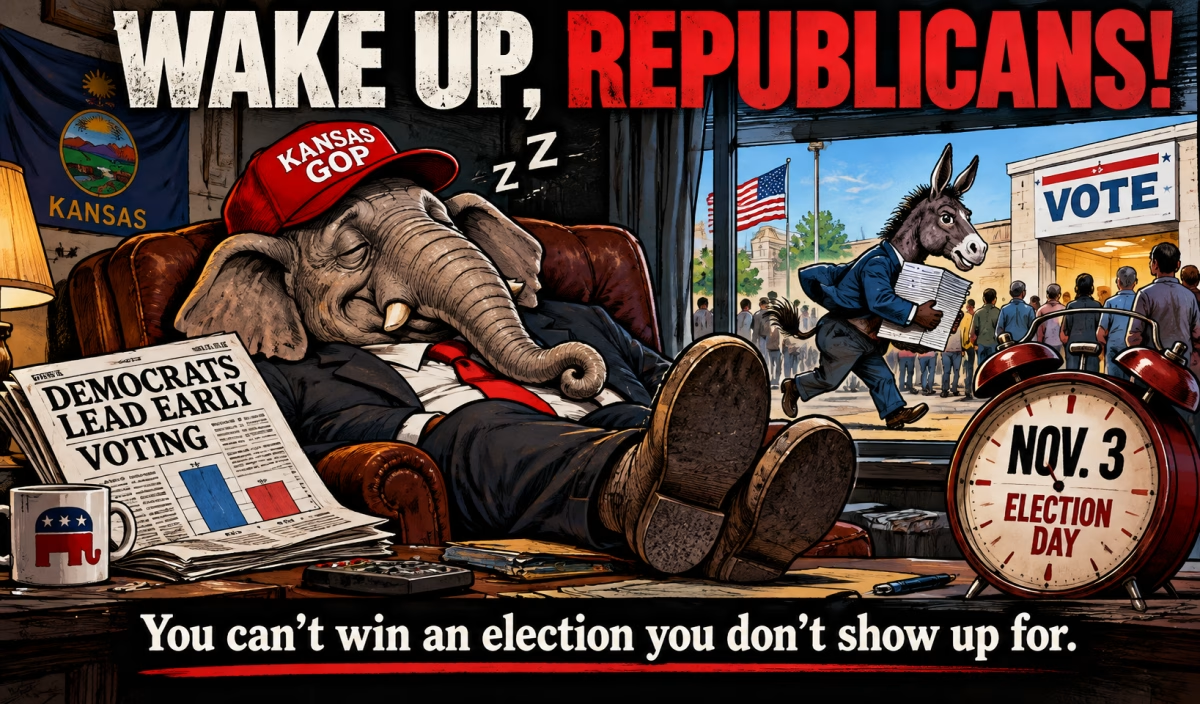
Early voting figures show Democrats outperforming Republicans in a state traditionally dominated by the GOP
TOPEKA – With just days remaining before the Nov. 3 general election, Kansas Republicans are facing an uncomfortable question: Do they actually care about winning?
New advance voting figures analyzed by Kansas election researcher Earl F. Glynn suggest Democrats are doing a considerably better job of getting their voters to the polls, threatening to turn what should be a Republican advantage into another election disappointment.
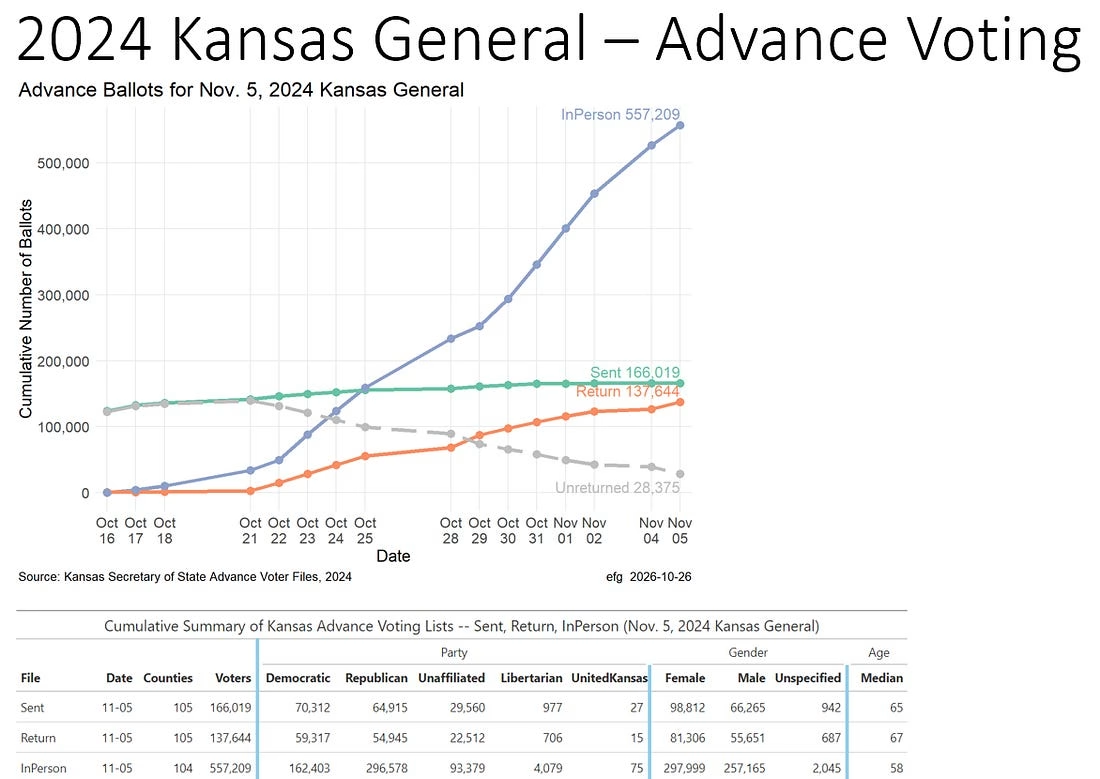
According to Glynn, who publishes the Watchdog Lab Substack, figures released Monday by the Kansas Secretary of State’s Office show registered Democrats leading Republicans by approximately 15,000 advance ballots statewide.
That includes 7,218 more returned mail ballots and 8,098 more ballots cast in person.
For the Kansas GOP the figures are particularly troubling when compared with previous Kansas elections, when Republicans dominated in-person advance voting.
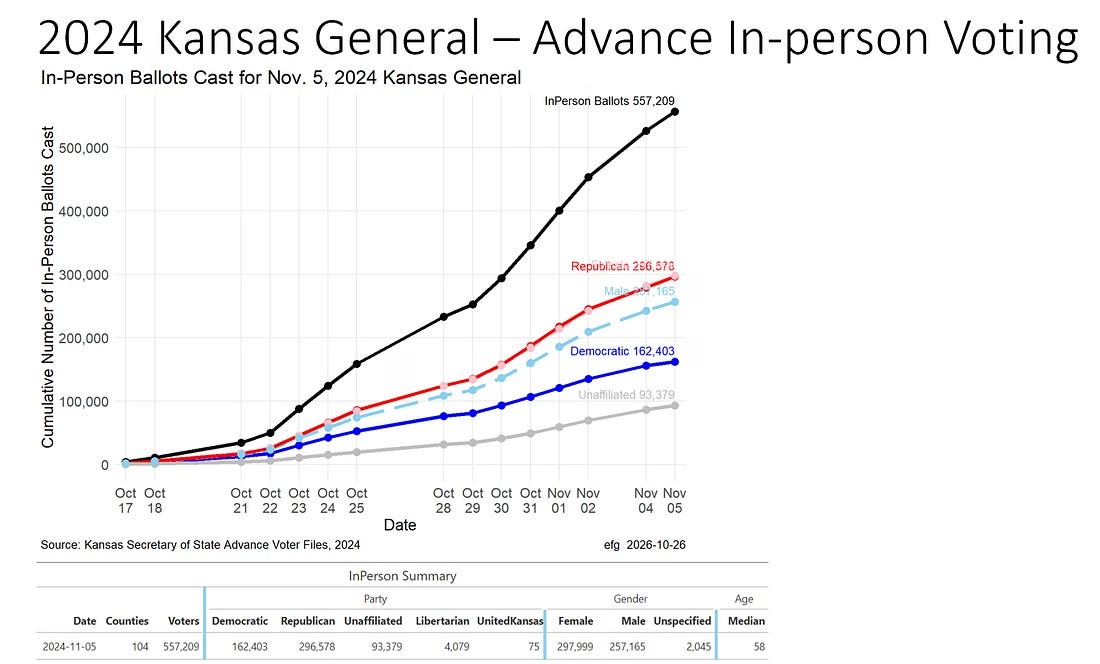
In November 2022, Republicans cast approximately 56,600 more in-person advance ballots than Democrats. Democrats held a 13,000-ballot advantage in returned mail ballots, leaving Republicans with an overall advance voting advantage of approximately 43,600. Nevertheless, Democratic Gov. Laura Kelly won reelection by approximately 22,000 votes.
In November 2024, the Republican advantage was even more pronounced. Republicans cast approximately 134,000 more in-person advance ballots than Democrats. Democrats held a relatively narrow advantage of 4,372 returned mail ballots, leaving the GOP with an overall advance voting advantage of 129,803 ballots. Donald Trump carried Kansas by approximately 214,000 votes that November.
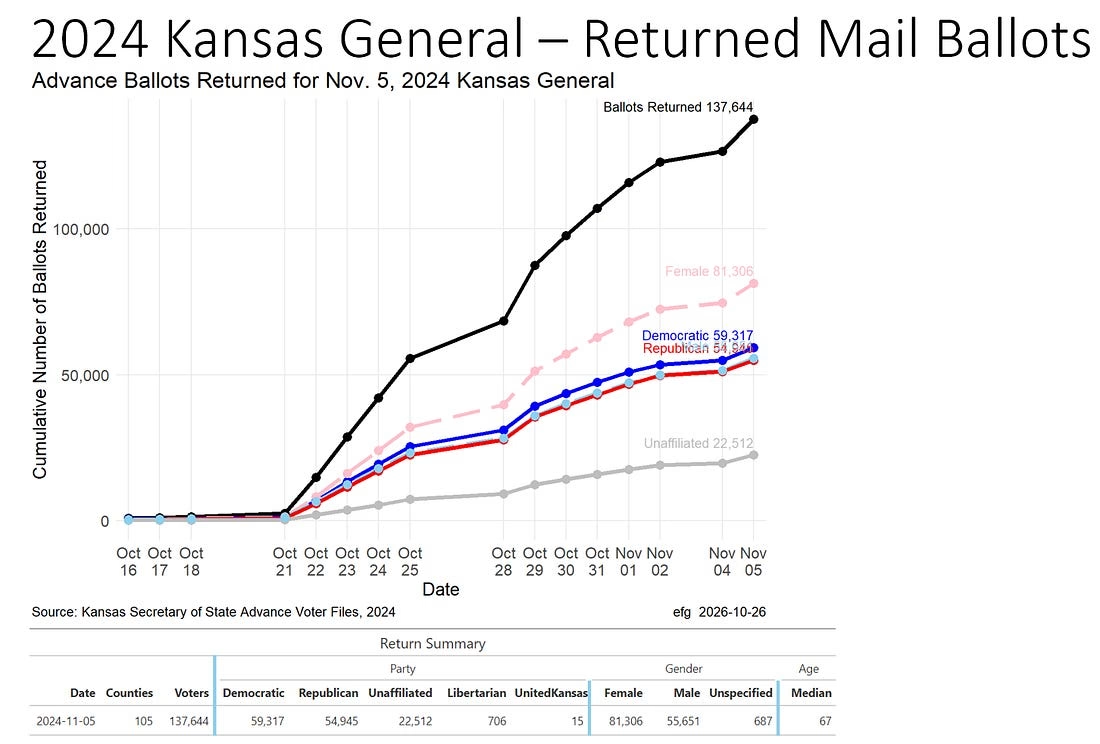
Now, instead of watching Republicans build an early advantage, the state GOP is watching Democrats take the lead. The comparison isn’t exact. Glynn’s 2022 and 2024 figures represent completed advance voting periods, while the 2026 numbers reflect voting still in progress. But the change in which party is leading is unmistakable. And it raises questions about Republican enthusiasm, organization and voter mobilization.
Glynn cautions against drawing premature conclusions.
“It’s unclear whether the Democrats pushing higher advance voting in 2026 is anything more than a shift in timing of voting,” he wrote. “We won’t know till after election day, but additional analysis may give hints.”
The figures identify voters by party registration, not whom they actually voted for. Republicans could also erase the deficit with stronger voting during the remaining advance voting period or on Election Day itself.
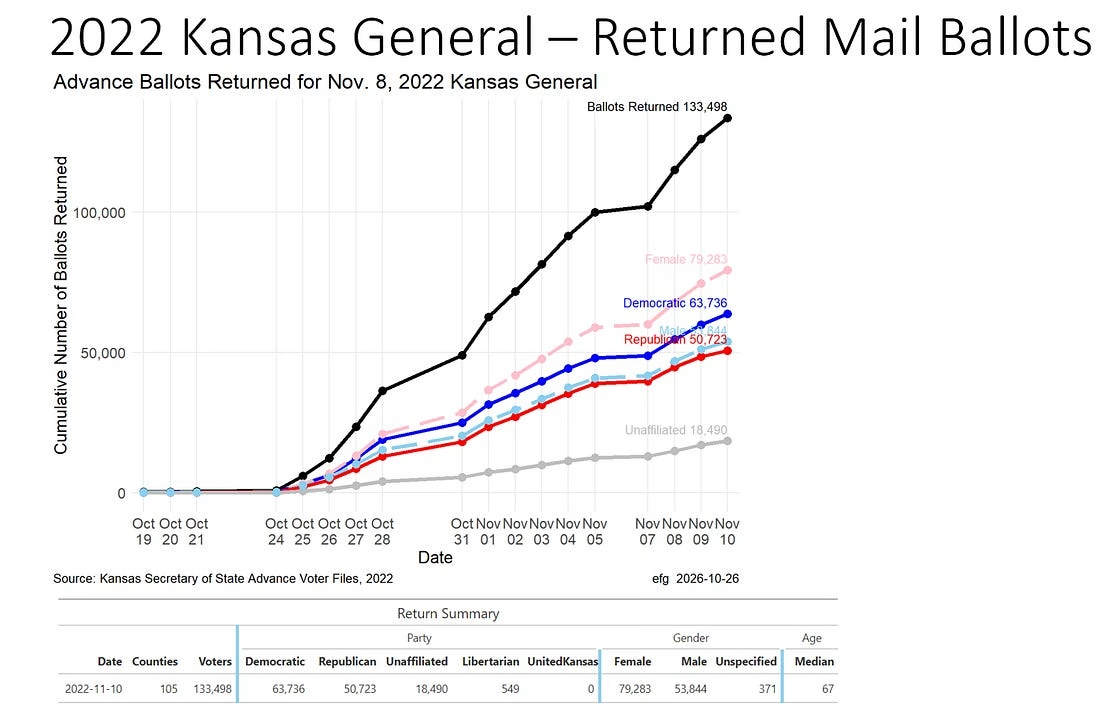
But Republicans counting on a last-minute rescue might remember what happened in 2022. Despite a substantial advance voting advantage, Republicans failed to unseat Kelly. The party’s numerical strength among registered voters did not translate into victory in the governor’s race.
There is also evidence that Democrats are especially motivated this year with the prospect of seizing one or both houses of congress. Approximately 154,000 Kansans had already voted by Friday, Oct. 23, exceeding advance participation at the same point in the previous two midterm elections. Glynn also points to the political environment.
“The left is highly energized this year, and there’s huge Super PAC money overwhelming the state,” he wrote. While the precise impact of outside spending remains uncertain, the early voting figures suggest Democrats are translating at least some of that energy into ballots.
Meanwhile, where is the comparable urgency among Kansas Republicans?
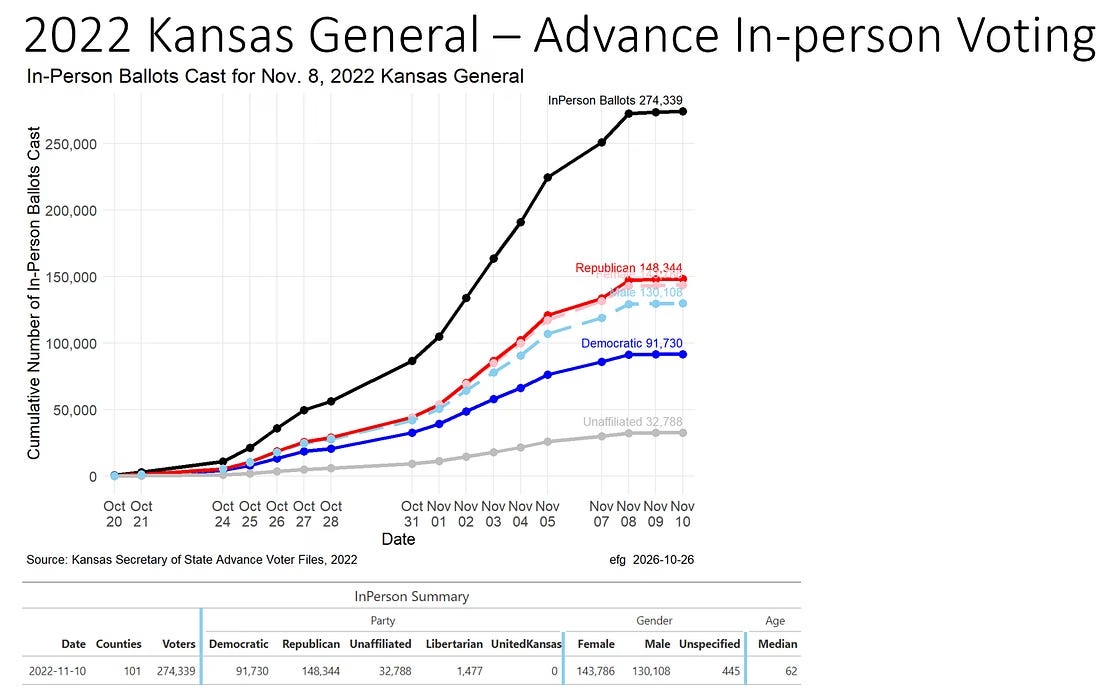
The GOP has long enjoyed a substantial voter registration advantage in Kansas, yet Republicans have repeatedly demonstrated that numerical superiority means little when voters fail to participate or when Republican candidates can’t persuade enough voters to support them.
Glynn poses another important question: “How accurate is a party label in predicting ballots cast?”
The answer may help explain why Republican voter registration advantages haven’t always translated into Republican victories. But as it stands so far, Democrats are winning the advance numbers game.


