

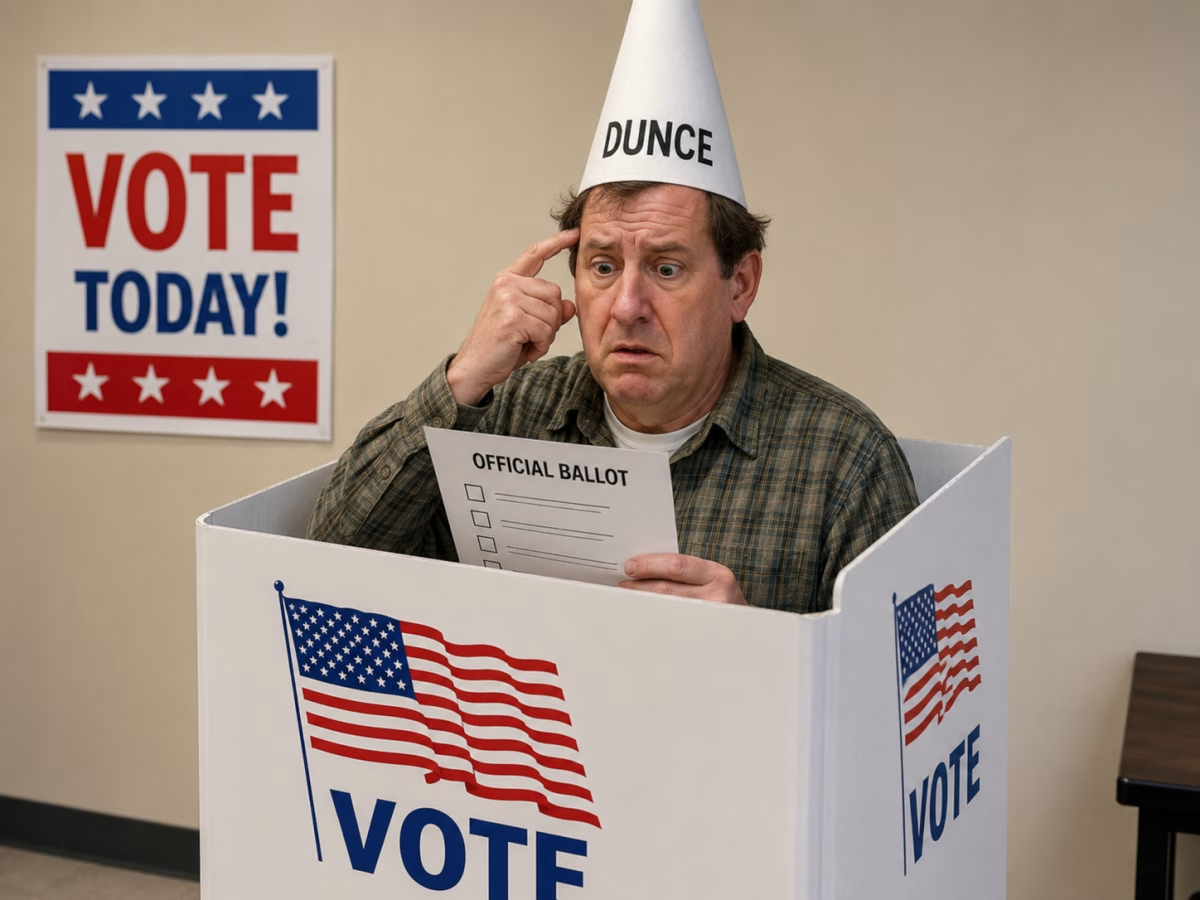
For those of us who vote regularly and even those who don’t, it’s more than just a little insulting to be told by the elitists in the Kansas judicial selection system that we’re not smart enough to vote for the state’s supreme court justices.
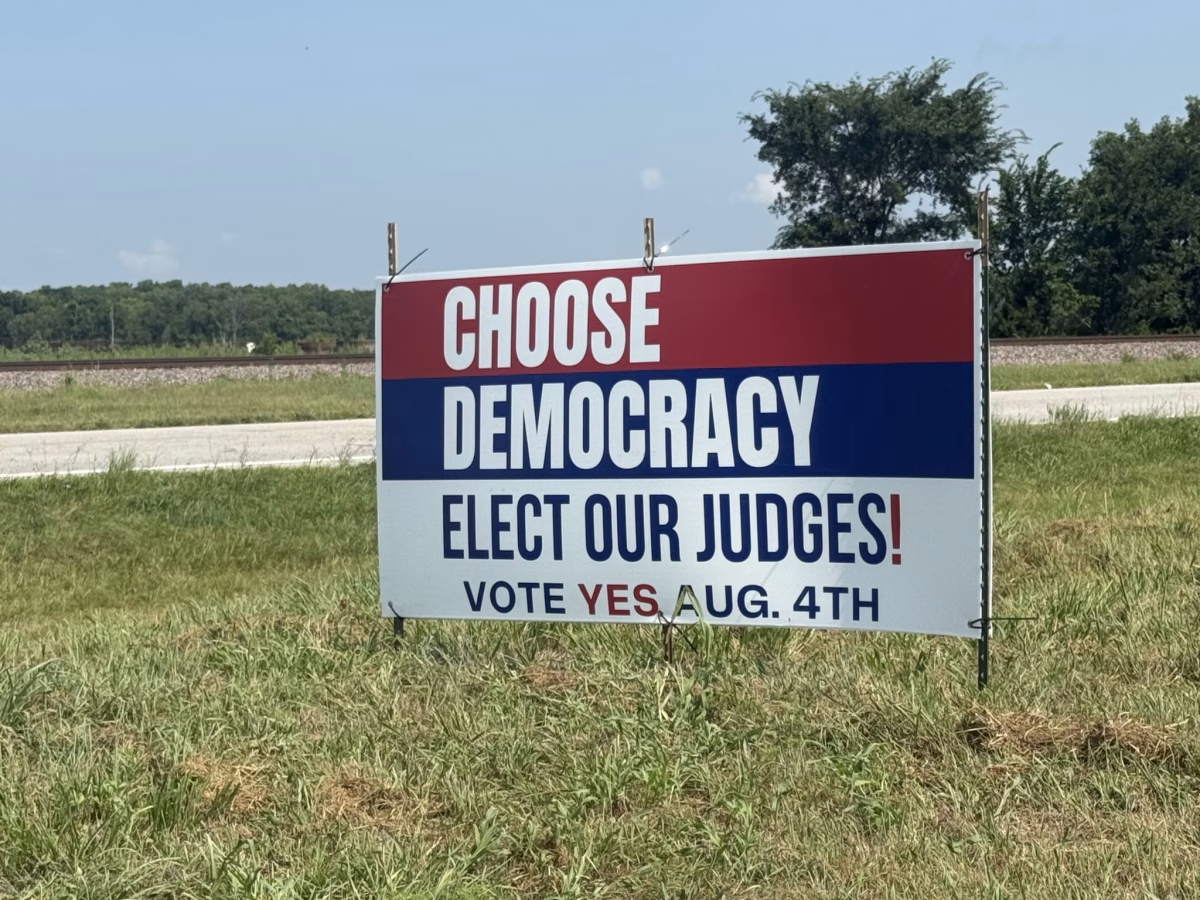
That’s a sentiment that is resounding throughout the current run-up to the August 4 primary vote which, if you vote “Yes,” will grant us that right.
And we should indeed all vote “Yes.”
Kansas voters elect the governor, attorney general, legislators, sheriffs, county commissioners, school board members and many district court judges. Yet when it comes to the state Supreme Court, the legal establishment tells ordinary citizens we don’t have what it takes.
What breathtaking arrogance.
Under the present system, a nine-member commission selects three finalists from whom the governor makes an appointment. Five commission members — a controlling majority — are lawyers elected by other lawyers. The remaining four are nonlawyers appointed by the governor. The official ballot explanation itself acknowledges that the commission has a lawyer majority.
That’s not government by the people. It’s government by a bunch of lawyers.
The commission’s defenders call this “merit selection,” as though merit can be determined only by attorneys meeting among themselves. The fallacy is the belief that this commission removed politics from the selection process. Poppycock. It merely moves the politics away from the voters and into a smaller, more exclusive room.
Candidates still have philosophies. Lawyers still have ideological preferences. Governors still have political interests. Organized groups still lobby, campaign and attempt to shape public policy. The notion that politics magically disappears because the public is excluded is simply ridiculous.
The politics remain, only the accountability disappears. The U.S. Supreme Court has been sending a solid message about that accountability back to Kansas by overturning the KSSC’s rulings en masse, even before the Trump era conservative USSC justice appointments:
- Kansas v. Hendricks (1997) — The Kansas Supreme Court invalidated the state’s Sexually Violent Predator Act, which allowed the civil commitment of certain dangerous sex offenders after their prison terms. The U.S. Supreme Court reversed, finding that the law did not violate due process, double-jeopardy or ex post facto protections.
- Kansas v. Marsh (2006) — The Kansas Supreme Court struck down part of the state’s death-penalty law because it required death when aggravating and mitigating circumstances were evenly balanced. The U.S. Supreme Court reversed and upheld the Kansas statute.
- Kansas v. Ventris (2009) — The Kansas Supreme Court ruled that statements obtained from a defendant through a jailhouse informant in violation of his Sixth Amendment rights could not be used at trial, even to challenge his testimony. The U.S. Supreme Court reversed, holding that the statements could be used for impeachment.
- Kansas v. Cheever (2013) — The Kansas court overturned Scott Cheever’s capital-murder conviction because prosecutors used evidence from a court-ordered psychiatric examination. The U.S. Supreme Court unanimously reversed, ruling that prosecutors could use the examination to rebut Cheever’s own expert testimony concerning his mental condition.
- Kansas v. Carr and Kansas v. Gleason (2016) — The Kansas Supreme Court vacated the death sentences of brothers Reginald and Jonathan Carr and convicted murderer Sidney Gleason. It found problems with jury instructions and, in the Carr cases, the use of a joint sentencing proceeding. The U.S. Supreme Court reversed the Kansas court’s judgments and reinstated the death sentences for further state proceedings.
- Kansas v. Garcia, Morales and Ochoa-Lara (2020) — The Kansas Supreme Court threw out identity-theft convictions involving illegal immigrants who used other people’s Social Security numbers. It held that federal immigration law preempted the Kansas prosecutions because the numbers also appeared on federal I-9 employment forms. The U.S. Supreme Court reversed, ruling that Kansas could prosecute the defendants for using the information on state tax and employment documents.
- Kansas v. Glover (2020) — The Kansas Supreme Court ruled that police lacked reasonable suspicion to stop a vehicle merely because its registered owner had a revoked driver’s license. The U.S. Supreme Court reversed, holding that an officer may ordinarily infer that the registered owner is driving when there is no information indicating otherwise.
The Aug. 4 constitutional amendment would abolish the lawyer-dominated commission and give Kansas citizens the right to elect Supreme Court justices to staggered six-year terms. The first elections would occur in 2028, with additional positions elected in 2030 and 2032.
Opponents say judicial elections could attract campaign money and outside interests. There’s some credence to this concern – not that it seems to bother many of those opponents when considering the election of other offices – but it is hardly a defense of the present insider system. Special interests don’t cease to exist merely because influence is exercised through governors, attorneys, professional associations and nominating commissioners instead of campaign advertisements.
At least campaign activity can be disclosed. Contributions can be reported. Candidates can be questioned. Voters can compare records and philosophies. Kansas already regulates campaign contributions for elected judges, and the Kansas Code of Judicial Conduct requires judicial candidates to comply with contribution and disclosure laws. It also warns that contributions can create grounds for removal. Those protections can be strengthened as the Legislature sets the rules.
Gubernatorial and legislative campaigns also attract donors, advertisements and interest groups, but no one seriously suggests abolishing those elections and allowing lawyers to choose those candidates because they’re so much smarter than we are.
The Supreme Court belongs to Kansas — not the Kansas bar, not the governor and not a collection of political insiders hiding behind what they determine is “merit.”
Don’t insult us and don’t gaslight us.
Vote “Yes,” and let us choose.