
WASHINGTON, D.C. – President Trump’s endorsement of Kansas Senate President Ty Masterson for governor will help define the Republican primary when it solidifies at noon tomorrow, but it also sharpens the question that has haunted Kansas Republicans for the past two governor’s races: Can a Trump-branded nominee win enough of the state’s Democrat and liberal Republican majority suburbs, university towns and so-called “moderate” voters to take back the governor’s office?
That question matters, because Kansas Republicans have already shown they can secure the state for Trump while twice losing the governor’s office – due to in large part to inept messaging and counterproductive angst within the party – a buzz-kill that alienated Republicans from their own candidates. The check valve was a consistent batch of legislative victories that preserved, then strengthened, the Republicans’ (usually) veto-proof majorities that thwarted Kelly’s mostly leftist agenda and steered Kansas on a more conservative track.
The Associated Press, in a 2024 Kansas election preview, stated the obvious: “Despite frequent Republican success at the presidential level, Democrats like two-term Governor Laura Kelly have won gubernatorial elections.”
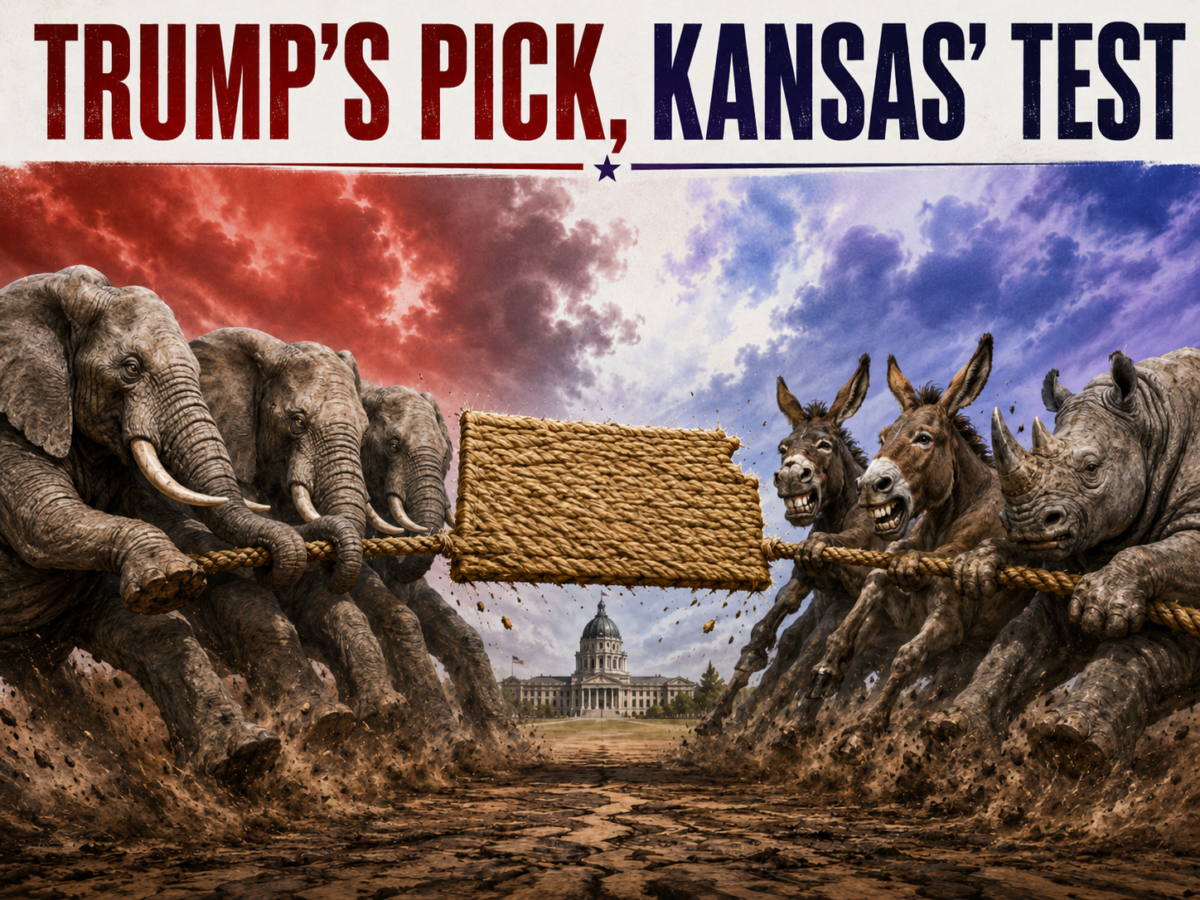
Trump’s endorsement of Masterson will prove powerful in a Republican primary, screening some number of the declared – but so far unfiled candidates –from the race to narrow the field before the August primary. Masterson, in fact, had not filed by the end of business Friday – only Secretary of State Scott Schwab, Charlotte O’Hara and Stacy Rogers had actually turned in paperwork for the race.
But in a general election, the same endorsement that will shape the Republican race could energize anti-Trump voters in Democrat and Dem-trending strongholds like Lawrence, Johnson County and Topeka — the very places where Republican nominees have struggled to run up the margins needed to defeat Kelly-style Democrats.
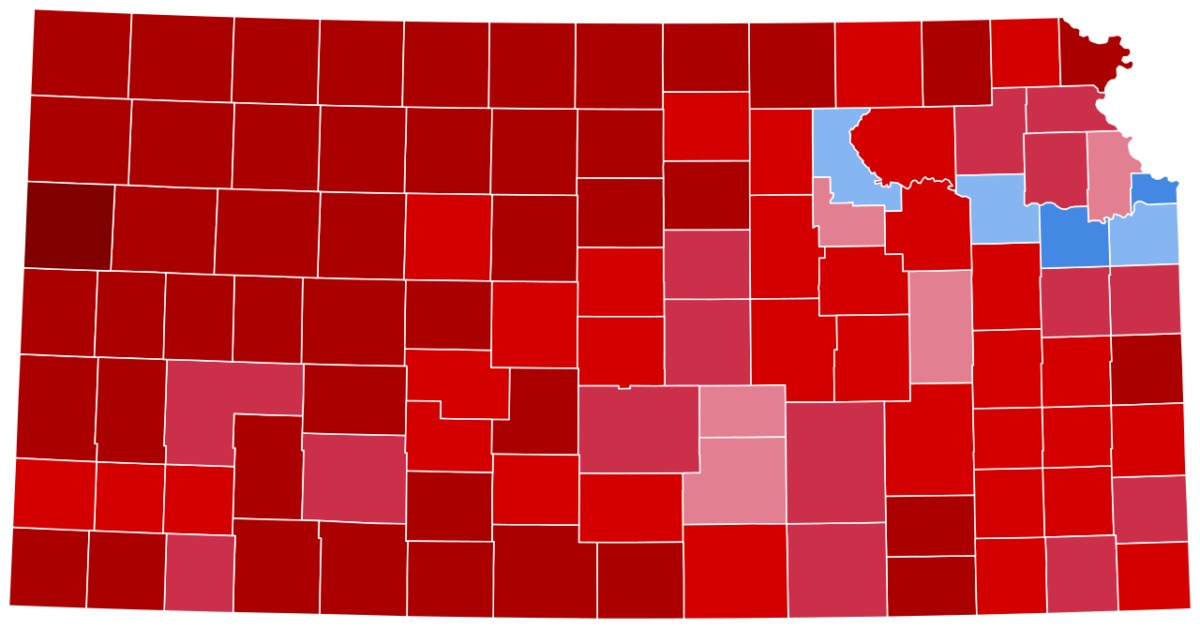
The recent presidential map shows the problem. In 2024, Trump again carried Kansas statewide, but he lost Douglas County by a wide margin, where Kamala Harris took 68.20% to Trump’s 30.19%. Harris also carried the population bastion of Johnson County 53.36% to 44.87%, and narrowly carried Shawnee County 49.26% to 48.77%.
Those numbers show where the danger lies for a GOP governor nominee, considering the division constantly arising within the party that drains votes from able candidates. Trump-Red Kansas Republicans gave 80,000 votes in the 2022 governor’s primary to a candidate charged with criminal threat against a law enforcement officer in Anderson County, then apparently stayed home in the general election or wasted their vote with heretical Republican-turned-Independent Dennis Pyle – all because neither of those GOP contenders was legitimate candidate Derek Schmidt.
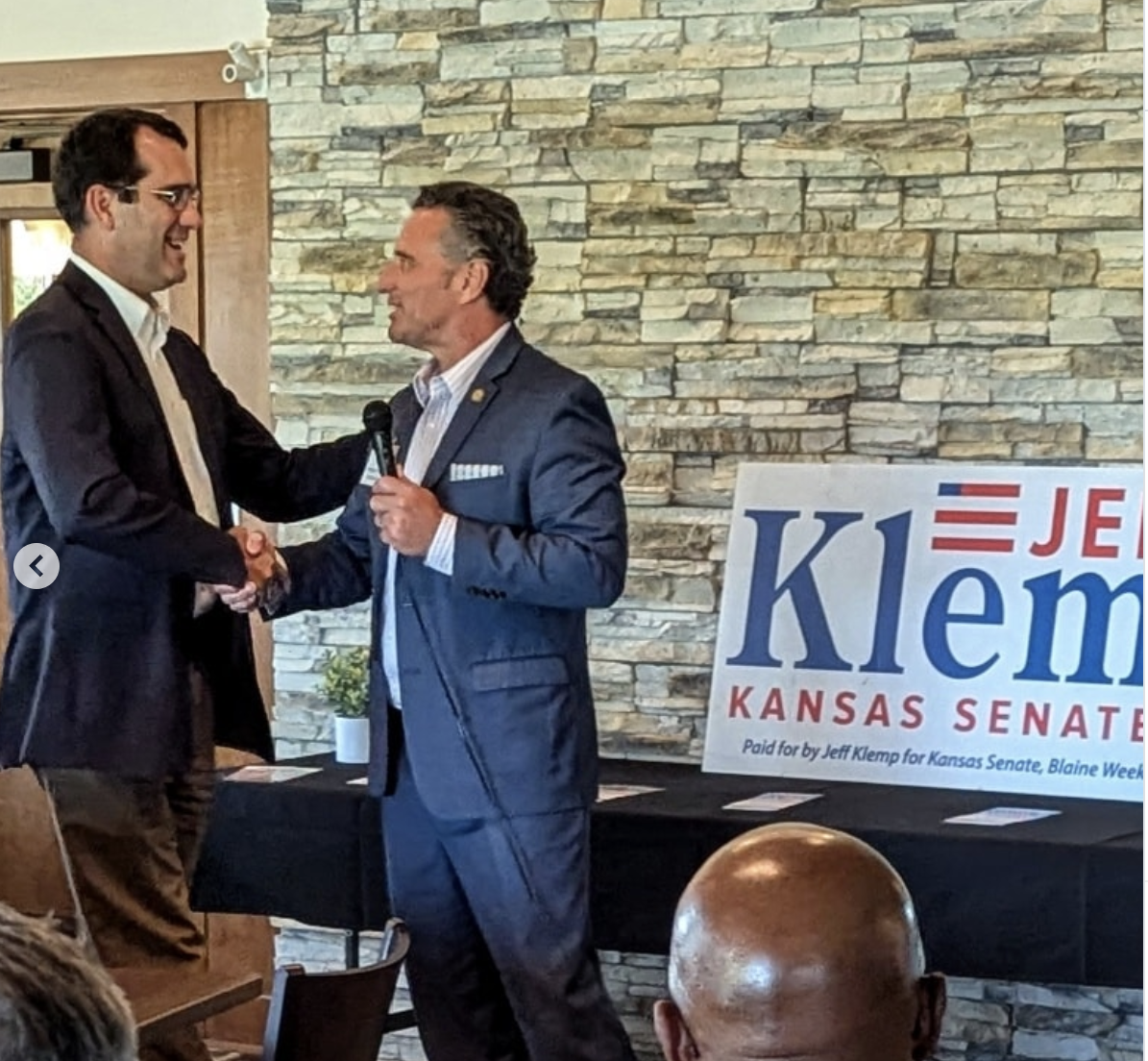
Masterson himself raised this point at the GOP’s Winter Convention candidate debate last January in Wichita, when O’Hara launched yet another tired salvo against Schwab regarding allegations of ballot destruction in Johnson County following the 2020 election.
“That type of thing is why we lose – in the general election particularly,” Masterson told the debate crowd. “What was the Reagan quote about 80 percent my friend not 20 percent my enemy? We spend time cutting each other off at the legs. This is not the enemy. The Democrats are the enemy.”
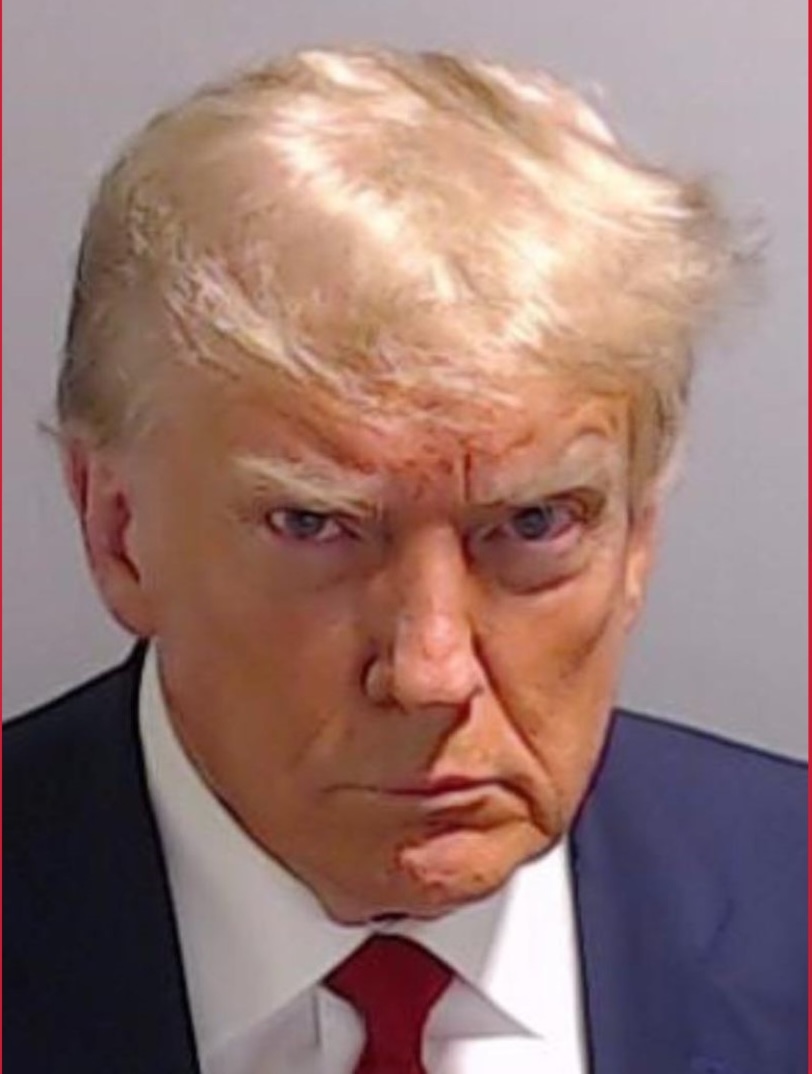
That’s the backdrop for Trump’s decision to endorse Masterson, who told WIBW he was “deeply honored” to receive Trump’s endorsement and tied his campaign directly to Trump’s agenda, saying the president “transformed our country by fighting for secure borders, lower taxes, American energy dominance, and putting working families first.”
But general polling says Masterson will need that momentum. A poll conducted by former Congressman Tim Huelskamp, Ph.D., showed Masterson well behind former Gov. Jeff Colyer and not yet breaking through with GOP voters. The Huelskamp poll, conducted May 11-12 among likely Kansas voters, showed Colyer leading the Republican primary field with 21.2%, followed by Philip Sarnecki at 11.2%, Insurance Commissioner Vicki Schmidt at 5.3% and Masterson at 2.8%. The poll also found that 54.5% of likely Republican primary voters remained undecided.
The poll’s own “Top-Line Analysis” called Colyer “inarguably the front runner” and said his standing was “further bolstered” by support among “nearly all types of self-identified Republicans,” including conservative, Trump, traditional and evangelical Republicans. The same analysis said six candidates, including Masterson, were “hovering at 5% or less.” Masterson’s favorability numbers were also weak. The Huelskamp poll showed him at 15.0% favorable and 22.2% unfavorable among likely Republican primary voters, with 62.9% unsure. The poll’s analysis said Colyer was the only tested candidate with “a clear net positive rating,” while Masterson was “underwater.” Perhaps most notably, Masterson was not leading even among self-described “Trump Republicans.” In that group, Colyer led with 34.2%, Sarnecki had 16.6%, and Masterson had 3.8%, while 41.9% were undecided.
That makes Trump’s endorsement less a reflection of where the Republican race stood and more an attempt to reorder it. If Trump’s support moves undecided Republican primary voters, Masterson could rise quickly in a field where the number say he has plenty of room to grow.
But the real risk rides in the general election numbers of the same poll. In hypothetical matchups against Democratic state Sen. Ethan Corson, the Huelskamp poll found former Governor Jeff Colyer leading Corson 41.9% to 36.0%. Schmidt was essentially tied with Corson, 37.0% to 36.9%. Sarnecki trailed Corson 40.0% to 37.8%, and Masterson trailed Corson 41.4% to 38.4%. The poll’s summary concluded that Colyer was “the clear front runner” for the Republican nomination and “the only Republican candidate positioned for a Republican victory in November.”
That is the case Colyer and other Republicans concerned about electability are likely to press: Trump may be able to make Masterson the nominee, but the governor’s race will be decided by a broader electorate that twice elected Kelly and includes thousands of blue voters who have rejected Trump-aligned politics in the state’s population centers. Kelly beat Derek Schmidt 499,849 votes to 477,591 in 2022.
For Republicans in Kansas, it’s going to be an interesting summer.