

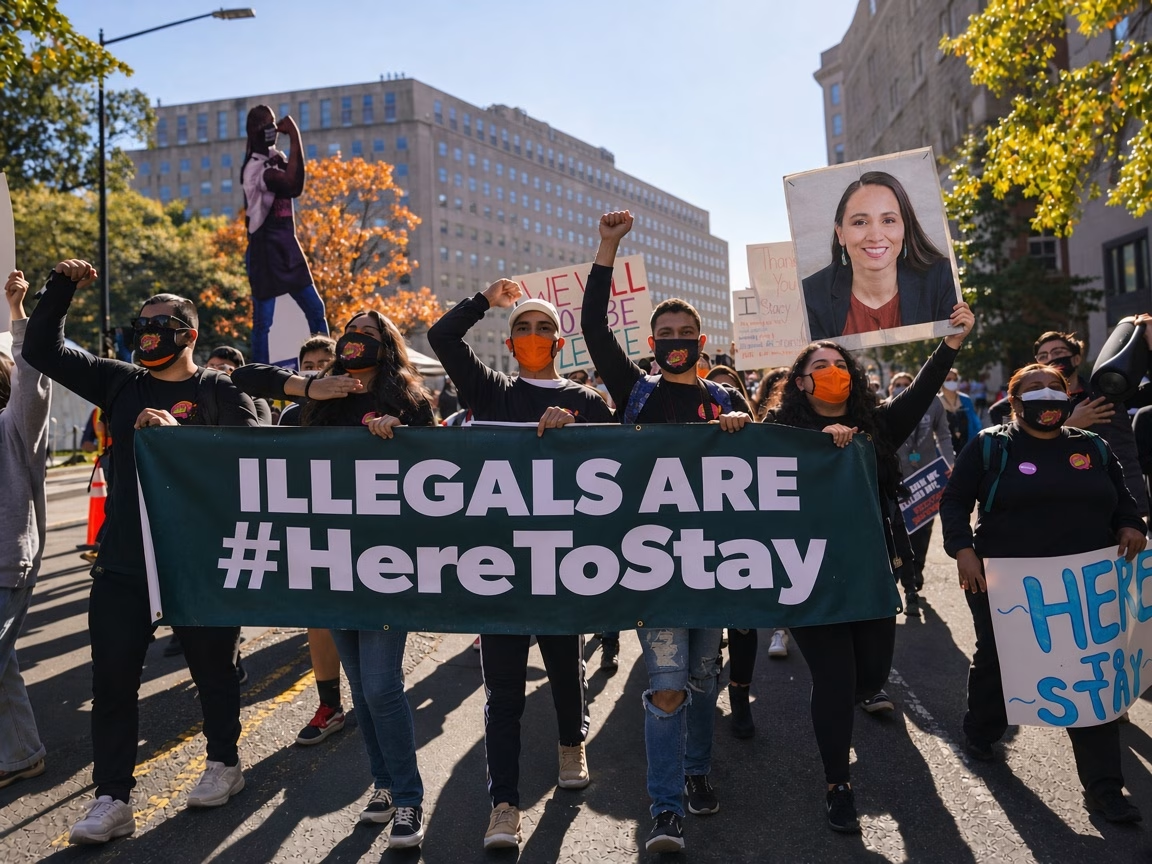
WASHINGTON, D.C. – It took Congresswoman Sharice Davids only two days after being safely re-elected to sign on as a co-sponsor to a bill to give illegal immigrants living in the U.S. amnesty – the attainment of legal status as well as work permits and protection from deportation.
Davids, who represents Kansas’ 3rd Congressional District, became a co-sponsor of H.R. 4393, known as the DIGNIDAD (Dignity) Act of 2025, on Nov. 5, according to congressional sponsorship records. Fifteen other Democrats – all facing re-election earlier this month – joined Davids in subsequent co-sponsorships after their re-election was assured.
The legislation would create a program allowing qualifying illegal immigrants to remain in the United States for seven years and subsequently obtain a renewable legal status that could permit them to remain indefinitely. It also contains separate provisions providing a pathway to permanent residency and eventual citizenship for certain immigrants brought into the country illegally as children.

Critics say amnesty for illegals is a precursor to expand the potential voter base for Democrats and floods low-income population into defined geographic areas to make those areas more likely to qualify for state and federal financial assistance.
The bill was originally introduced July 15, 2025, by Republican Congresswoman María Elvira Salazar of Florida, with Democratic Congresswoman Veronica Escobar of Texas as a leading co-sponsor. Davids waited nearly 16 months after its introduction to add her name, doing so immediately following the midterm election.
The legislation’s central immigration provision, contained in Sections 2301 through 2305, would establish what is called the Dignity Program. Under the program, immigrants who have been continuously present in the United States since Dec. 31, 2020, could apply for protection from deportation and authorization to work and travel legally.
Applicants would be required to undergo background checks, provide biometric information and meet other eligibility requirements. They would also have to pay an initial $1,000 restitution fee, followed by additional payments totaling $7,000 over seven years.
Participants would be required to comply with applicable tax laws, maintain employment or pursue education for specified periods, and pay an additional 1% levy on employment income. The legislation would exempt participants from certain Social Security and Medicare payroll taxes.
Davids’ office said the congresswoman intended to co-sponsor the bill in February, but lead sponsors wanted to add Democrat and Republican co-sponsors in tandem to give the appearance of a bi-partisan supported bill.
“Rep. Davids is glad to join Republicans and Democrats backing practical fixes to secure the border and support Kansas employers,” said Davids’ communication director Zac Donley.
As of Nov. 18 the bill has has 55 co-sponsors: 35 Democrats and 20 Republicans:
Democratic co-sponsors (35): Jake Auchincloss (Massachusetts), Yassamin Ansari (Arizona), Nikki Budzinski (Illinois), Salud Carbajal (California), Jim Costa (California), Angie Craig (Minnesota), Henry Cuellar (Texas), Sharice Davids (Kansas), Chris Deluzio (Pennsylvania), Sarah Elfreth (Maryland), Veronica Escobar (Texas), Adriano Espaillat (New York), Laura Gillen (New York), Josh Gottheimer (New Jersey), Adam Gray (California), Steven Horsford (Nevada), Chrissy Houlahan (Pennsylvania), Val Hoyle (Oregon), Julie Johnson (Texas), Raja Krishnamoorthi (Illinois), Greg Landsman (Ohio), Susie Lee (Nevada), Mike Levin (California), Betty McCollum (Minnesota), Kristen McDonald Rivet (Michigan), Seth Moulton (Massachusetts), Frank Mrvan (Indiana), Chris Pappas (New Hampshire), Pat Ryan (New York), Josh Riley (New York), Hillary Scholten (Michigan), Emilia Sykes (Ohio), Tom Suozzi (New York), Dina Titus (Nevada) and Lori Trahan (Massachusetts).
Republican co-sponsors (20): Jim Baird (Indiana), Don Bacon (Nebraska), Monica De La Cruz (Texas), Mario Diaz-Balart (Florida), Neal Dunn (Florida), Gabe Evans (Colorado), Brian Fitzpatrick (Pennsylvania), Carlos Gimenez (Florida), Mike Kelly (Pennsylvania), Jennifer Kiggans (Virginia), Young Kim (California), Kimberlyn King-Hinds (Northern Mariana Islands), Nick LaLota (New York), Mike Lawler (New York), James Moylan (Guam), Dan Newhouse (Washington), Zach Nunn (Iowa), Lloyd Smucker (Pennsylvania), Marlin Stutzman (Indiana) and David Valadao (California).
Illegal immigration was the number one issue of the 2024 presidential campaign that saw President Trump re-elected over Kamala Harris, with between 60 and 80 percent of those polled citing stopping illegal entry into the country as their top issue.
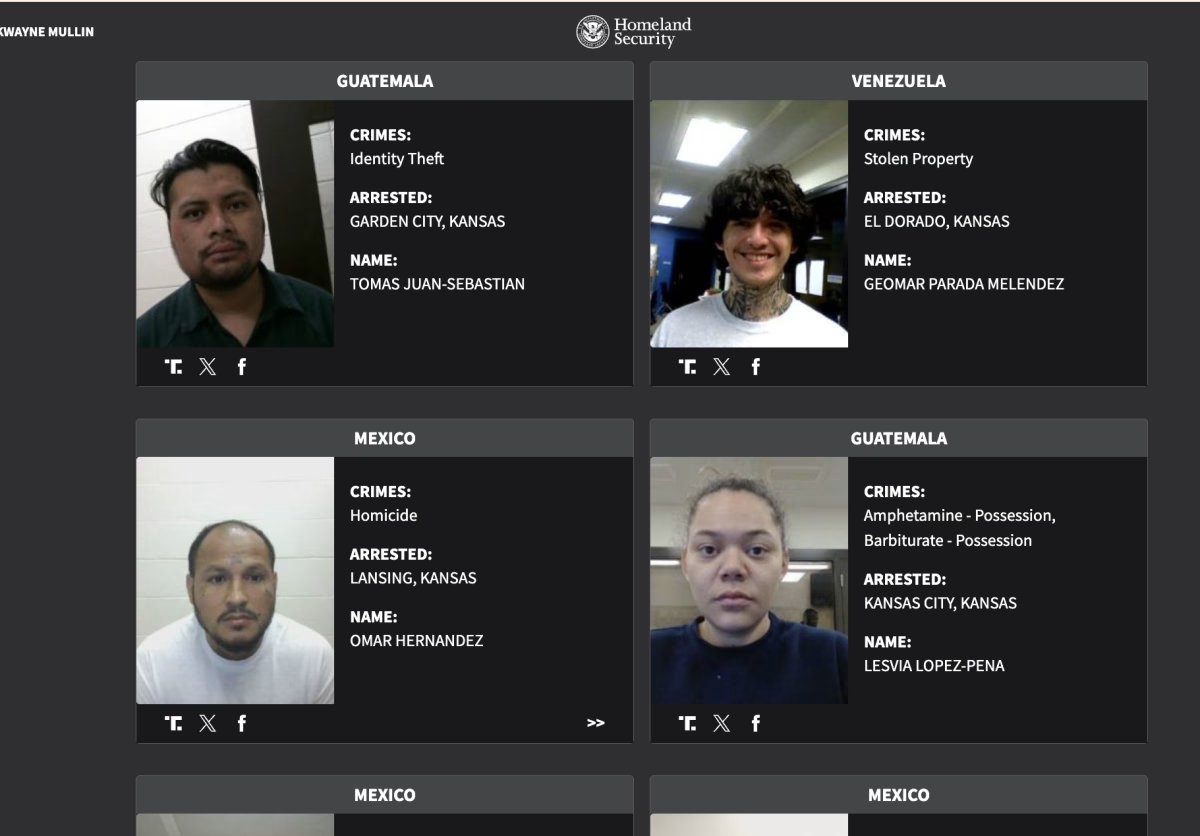
The legislation comes as researchers estimate approximately 15.8 million illegal immigrants were living in the United States as of mid-2024, according to figures released in July 2026 by the Migration Policy Institute. Separately, Immigration and Customs Enforcement reported in 2024 that 662,566 noncitizens on its immigration enforcement dockets had criminal convictions or pending charges, including 435,719 with previous convictions. The Department of Homeland Security reported removing more than 215,000 noncitizens with convictions or pending charges during the first 10½ months of fiscal year 2026.
Although the general program would not automatically grant permanent residency or citizenship, it would allow eligible immigrants who previously faced deportation because of their unlawful immigration status to remain and work in the United States indefinitely, provided they continued meeting program requirements.
The legislation also would waive certain existing immigration penalties. Under current law, immigrants who accumulate unlawful presence in the United States can face three-year or 10-year bars against returning legally after leaving the country. H.R. 4393 would make those restrictions inapplicable to qualifying Dignity Program participants.
Another provision would protect some immigrants from deportation while their applications are pending. Individuals appearing initially eligible for the program could receive temporary protection during a 24-month period following enactment, with protections potentially continuing until their eligibility is determined.

The bill generally excludes immigrants convicted of serious crimes, including felonies and certain misdemeanor offenses. However, it would give the secretary of Homeland Security authority to waive some misdemeanor disqualifications under specified circumstances.
For example, the secretary could disregard one misdemeanor conviction if the applicant had avoided further convictions for five years, or as many as two misdemeanor convictions after a 10-year period without another conviction.
The legislation also contains a version of the DREAM Act, which would allow certain immigrants brought to the country as children to obtain conditional permanent resident status. Those meeting additional education, military service or employment requirements could eventually qualify for unrestricted permanent residency and pursue citizenship.
On Nov. 16, Salazar announced that the legislation had reached 56 sponsors and co-sponsors, including Davids, reflecting growing support among lawmakers from both parties. Davids’ decision to sign onto the measure two days after the election establishes her support for its provisions, although her co-sponsorship does not establish why she selected that date rather than joining the legislation earlier.
As of Nov. 17, H.R. 4393 remained in Congress and had not become law. No final House vote had been taken on the proposal nor was it likely to be taken up in the waning months Republicans control the House.
If enacted, however, the legislation would represent a significant change in federal immigration policy by allowing a substantial population of immigrants currently living in the country illegally to obtain protection from deportation, legal employment authorization and potentially indefinite permission to remain in the United States.