

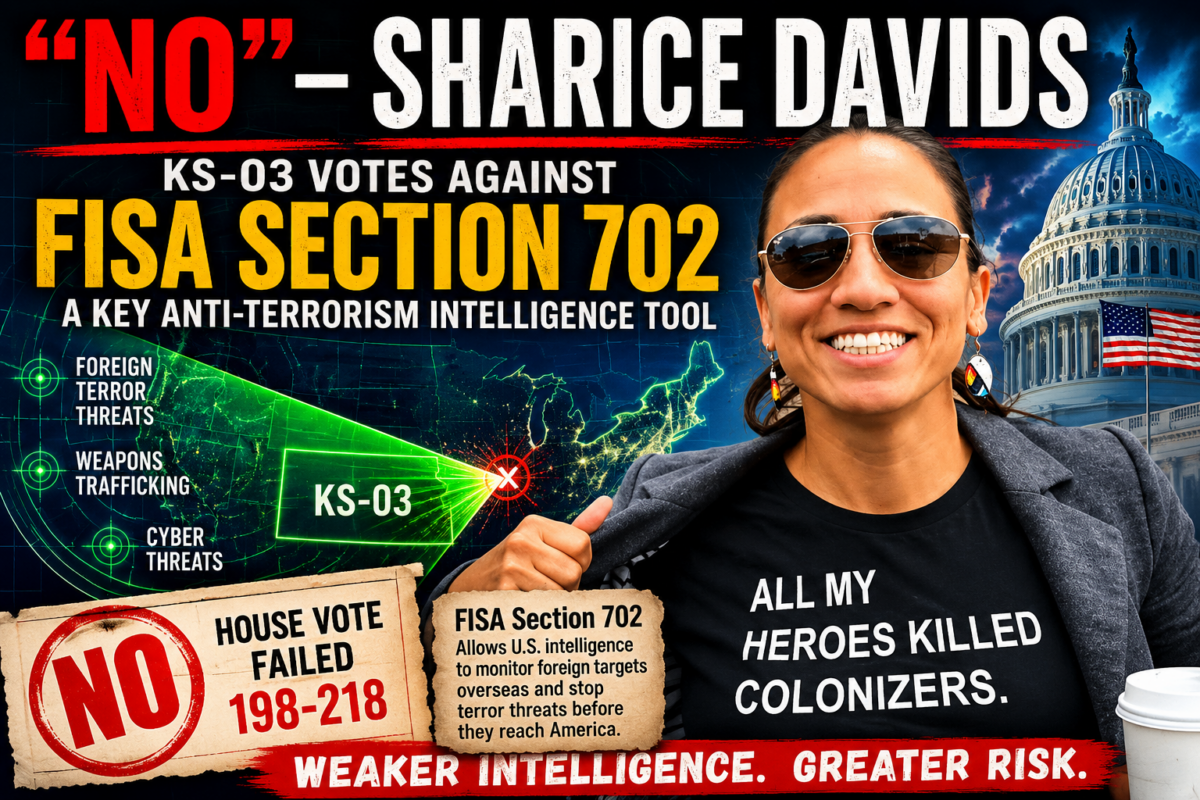
WASHINGTON, D.C. – Amid what defense analysts say is an advanced terrorism threat risk during the World Cup games in the U.S., 3rd District Congresswoman Sharice Davids voted with Democrats last week to kill a renewal of a major U.S. foreign-intelligence surveillance law.
Davids joined most Democrats in opposing an extension of Section 702 of the Foreign Intelligence Surveillance Act, commonly known as FISA. First District Congressman Tracey Mann and 4th District Congressman Ron Estes voted in favor of the anti-terrorism bill. Rep. Derek Schmidt did not vote.
Republican Sens. Jerry Moran and Roger Marshall both voted earlier to advance a Senate FISA measure, but that effort also failed.
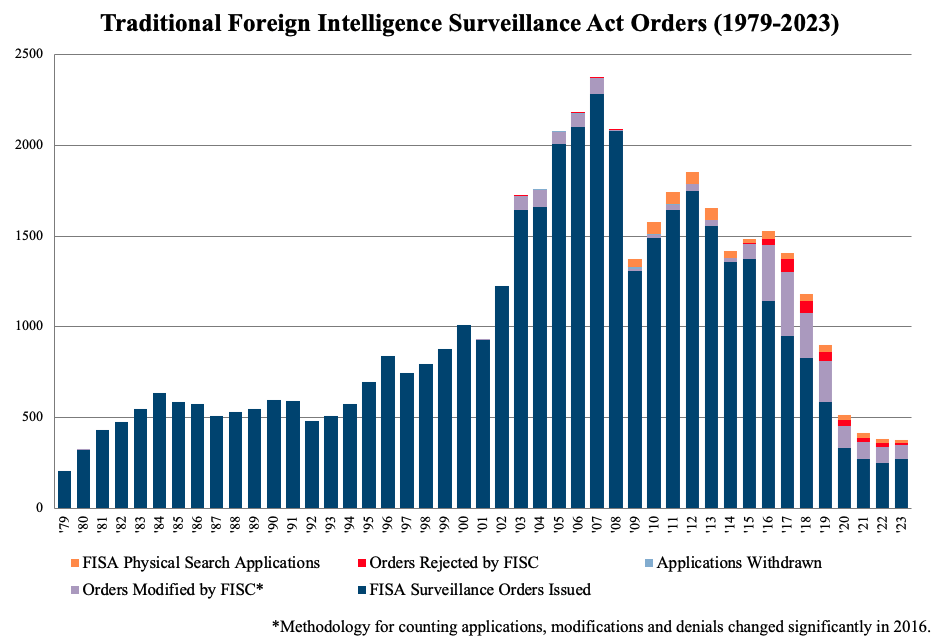
The House bill would have extended Section 702 authority for a few weeks, through July 2. It failed June 11 on a 198-218 vote. Because the bill was considered under suspension of the rules, it needed a two-thirds majority to pass. The vote included 190 Republicans, seven Democrats and one independent in support, while 199 Democrats and 19 Republicans voted against it.
FISA was originally enacted in 1978 to create legal rules for national-security surveillance. The current fight centers on Section 702, a post-9/11 surveillance authority that allows U.S. intelligence agencies to collect communications of non-Americans located overseas without obtaining an individualized warrant for each target.
Supporters say the program is one of the federal government’s most important intelligence tools, used to monitor foreign terrorists, hostile governments, cyber threats and drug-trafficking networks. Opponents counter that while Section 702 targets foreigners overseas, Americans’ communications can be incidentally collected when they communicate with foreign targets.
The immediate national-security effect of the failed vote is disputed. The government is not instantly cut off from every existing surveillance stream, because previously approved FISA Court certifications may allow some current collection to continue for a period of time. But national-security hawks warn the legal footing grows weaker the longer Congress fails to reauthorize the program, especially if technology and communications companies become reluctant to cooperate with new or expanded surveillance directives.
Heritage Foundation: The Role of a Strong National Defense
Republican supporters of the extension accused Democrats of scuttling a core national-security tool over objections to President Donald Trump’s temporary appointment of Bill Pulte as acting director of national intelligence. Pulte, a mortgage regulator and Trump ally, has drawn Democratic criticism because he lacks a traditional intelligence background. Opposition to a Trump appointee or an adminstration push for key legislation has become expected as Democrats attempt to obstruct all facets of the Trump “Make America Great Again” agenda.
House Speaker Mike Johnson and other Republicans have argued Democrats are holding national security hostage in a political fight over Trump’s intelligence leadership. House Intelligence Chairman Rick Crawford, R-Ark., has defended Section 702 as essential to preventing terrorist attacks, countering cyber threats and disrupting fentanyl trafficking.
Democrats have argued that Congress should not renew sweeping surveillance authority without stronger safeguards and without resolving concerns over who controls the intelligence community. Some Democrats have said Pulte’s appointment intensified concerns about potential politicization of intelligence powers.
The fight was further complicated when Trump said he would oppose a FISA extension unless Congress also passes his SAVE America Act, a voting bill requiring proof of citizenship and photo identification provisions. That demand tied the surveillance debate to a separate election-law fight and exposed divisions among Republicans as well as Democrats.
Davids’ vote to scuttle FISA follows other anti-defense votes during her recent tenure. In June 2024 she voted against a pay raise of some 20 percent of junior military enlisted personnel. Also in June of that year she voted against a measure that would initiate sanctions against members of the International Criminal Court and associated individuals if they took part in an investigation or arrest of a U.S. ally – primarily Israel – after recent anti-Israel assertions by the United Nations-connected court.
Davids’ social media accounts contained no posts explaining her FISA vote as of mid week.