

Politics has a way of flattening people.
We learn their party, their position and their voting record. We see their names on yard signs and hear them discussed in thirty-second advertisements. Somewhere along the way, it becomes easy to forget that the people who serve in public office are shaped by the same things that shape the rest of us: family, hardship, faith, failure and responsibility.
That is an important part of understanding Kansas Senate President Ty Masterson.
Masterson has spent decades in public life, first in local government in Andover, then in the Kansas House and eventually the Kansas Senate. Today, he serves as president of that body. But his political résumé tells only part of his story.
The more revealing story may be found at home.
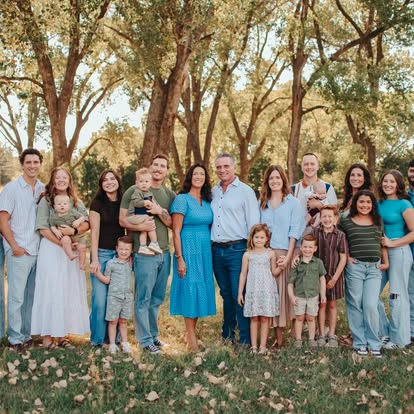
Ty and his wife, Marlo, have been married for roughly three decades. They raised six children and today have a growing number of grandchildren. Masterson has spoken about his family as one of the central reasons he cares about Kansas’ future. He wants his children and grandchildren to be able to remain here, find opportunity here and raise families of their own here.
There is something deeply relatable about that motivation.
Most parents do not think about the future as an abstract exercise. They think about whether their children will be able to afford their first home. They wonder whether good jobs will be available nearby or whether their children will have to leave the state to find opportunity. Grandparents wonder what kind of community their grandchildren will inherit.
For Masterson, those questions are personal.
So is his faith.
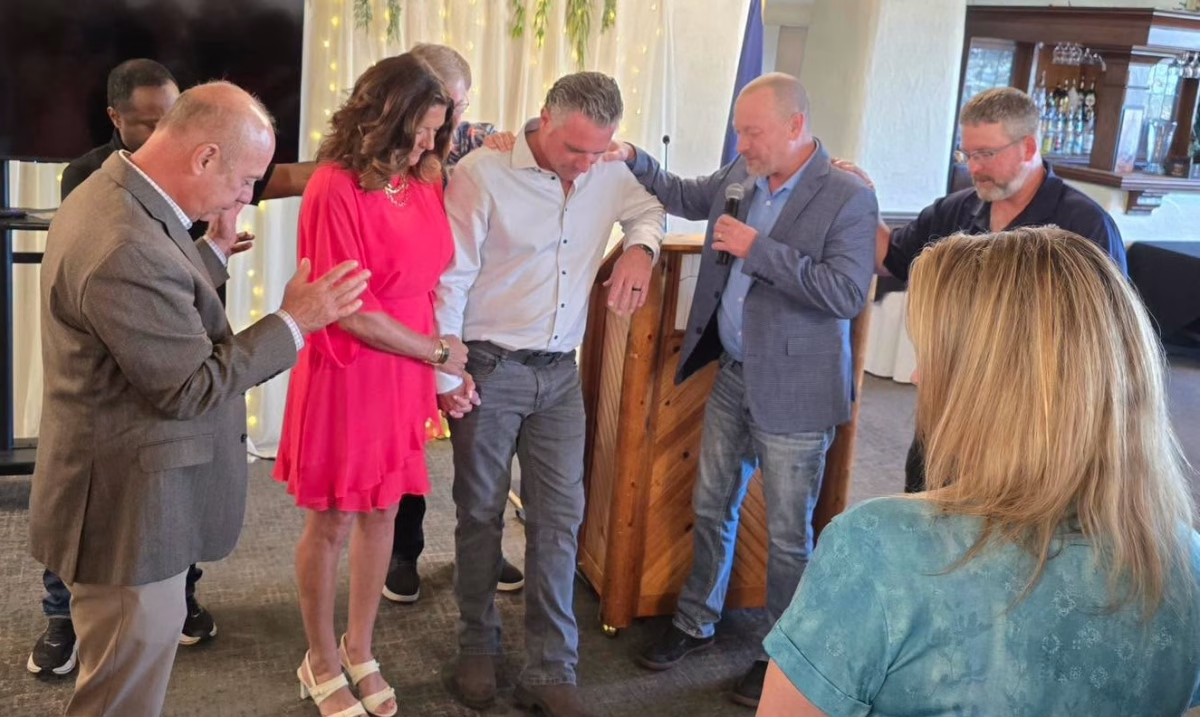
Faith can be easy for a public figure to discuss and much harder to demonstrate through the way a person approaches other people. One of the more interesting aspects of Masterson’s approach to leadership has been his stated philosophy of assuming good intentions in others.
That may seem like a small thing. In today’s politics, it isn’t.
Empathy does not require agreement. It requires recognizing that the person across the table arrived there through a life every bit as complicated as your own. Faith, at its best, reinforces that recognition: that every person possesses worth beyond his or her politics and that leadership carries obligations beyond simply winning an argument.
Masterson’s own life gives that idea another dimension.
His path was not one of uninterrupted success. He has spoken publicly about running out of money for college, living in a mobile home and working in the building trades. He has also discussed going through bankruptcy during the housing crisis.
Those experiences matter because hardship has a way of making seemingly distant problems tangible.
A family struggling with housing costs is not merely a statistic when you remember what financial uncertainty feels like. A tradesman trying to make a living is easier to understand when you have worked in those environments yourself. A parent worrying about a child’s future looks different when you have raised six children of your own.
That does not mean everyone will agree with every decision Masterson has made in Topeka. Nor should they. Public officials should be debated, questioned and held accountable for their records.
But disagreement does not prevent us from recognizing character, motivation or humanity.
Perhaps that is something our politics could use more often.
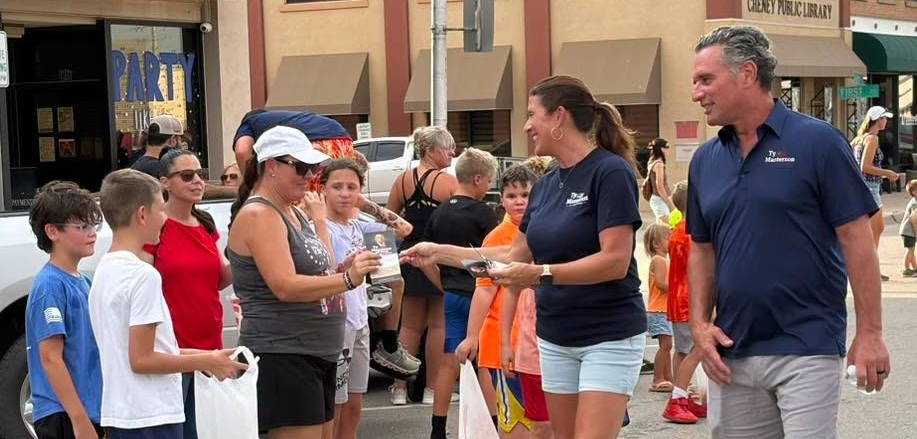
We frequently talk about empathy as though it belongs to one political philosophy or another. It doesn’t. Empathy is fundamentally the ability to understand that another person’s struggles are real, even when they are not your own.
For Masterson, faith and family appear to provide two different paths toward the same lesson.
Faith asks a person to look beyond himself. Family requires him to do it every day.
After decades of marriage, raising six children, becoming a grandfather, building businesses, experiencing financial setbacks and serving his community, Masterson has accumulated experiences that cannot be captured by a campaign slogan.
They offer something quieter: perspective.
In an age when politics rewards the loudest voice in the room, there remains value in remembering what exists outside that room — spouses, children, grandchildren, churches, businesses, mortgages and ordinary families trying to build good lives.
Those are not Republican concerns or Democratic concerns.
They are human ones.
And understanding the human side of the people who seek to lead us may tell us something that a yard sign never could