


EMPORIA – A sweeping rejection of large-scale data centers by voters in four Kansas communities Tuesday dovetailed with assessments on Wall Street Thursday that led to a massive tech stock sell off, pressing the notion that the Democrat takeover of congress will thwart U.S. technology development for artificial intelligence infrastructure.
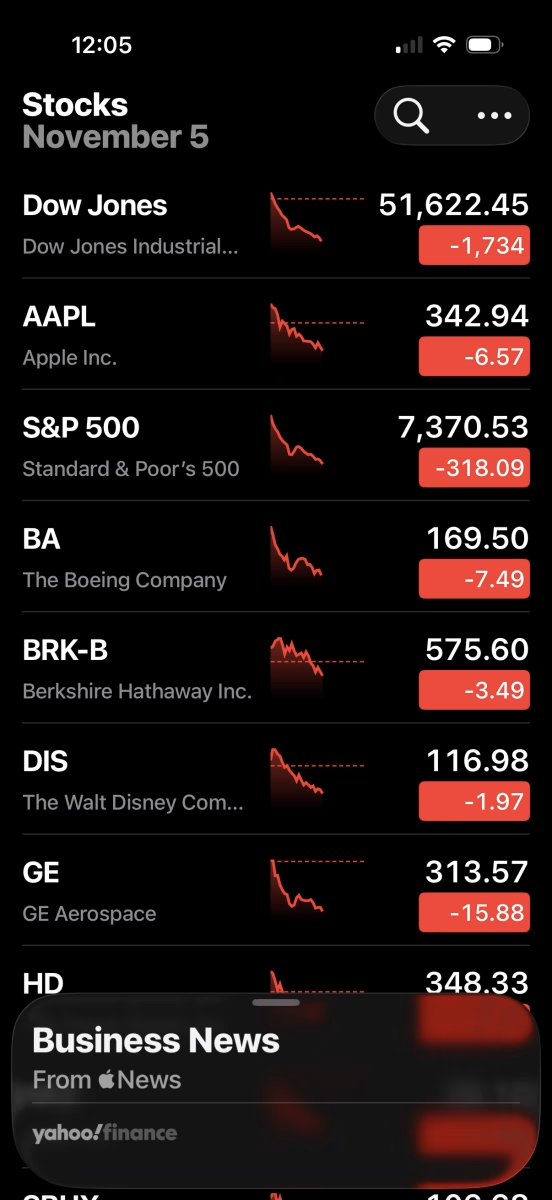
The Dow Jones Industrial Average plunged 1,833 points Thursday, a 3.4 percent decline, while the technology-heavy Nasdaq Composite fell 5.5 percent and the S&P 500 dropped 4.4 percent. The declines erased the previous day’s post-election rally and marked Wall Street’s worst session since April 2025, according to The Associated Press.
Technology companies tied to artificial intelligence and data center construction suffered particularly heavy losses. Nvidia, a leading supplier of computer chips powering AI systems, fell 9.3 percent, while Advanced Micro Devices plunged 17.3 percent. GE Vernova, which supplies power equipment for data centers, lost 7.5 percent, the AP reported.
The selloff reflected concerns that the results of Tuesday’s midterm elections, including widespread voter rejection of data center developments and Democratic gains in Congress and state governments, could result in additional restrictions on the industry. That sentiment was reflected in referendums in Kansas, where voters in Ottawa, Emporia, El Dorado and Americus approved five separate ballot measures restricting high-impact data centers, industrial battery energy storage systems or both.
“The market’s interpretation is that the AI infrastructure buildout will become slower and more expensive, which is rewriting growth expectations across the whole supply chain,” eToro market analyst Jakub Rochlitz told Fox Business on Thursday.
Analysts also cited elevated technology stock valuations, borrowing costs and questions about the sustainability of massive AI infrastructure spending.
The Kansas referendums were part of a broader political shift affecting investor sentiment, and passed with support ranging from 56.6 percent to nearly 72 percent, according to unofficial election returns.
In Ottawa, Franklin County, voters approved restrictions on large data centers by a margin of 2,882 to 1,129, or approximately 71.9 percent. The ordinance prohibits hyperscale data centers requiring more than 25 megawatts of electricity within city limits.
The measure followed months of controversy surrounding Lightfield Energy’s proposed 300-acre data center development at Proximity Park. Although the Ottawa City Commission voted in September to terminate its land sales agreement with the developer, citizens continued their campaign to prevent similar projects.
“I have never been prouder of anything in my life besides my children,” Jessica Christopher, who wrote the ordinance, told Kansas City television station KSHB following Tuesday’s election.
Ottawa resident Kim Conard told the station the victory demonstrated the importance of citizen participation in government.
“It gives you faith back in our democratic process and the fact that you can have a voice,” Conard said.
Ottawa City Manager Thatcher Moddie acknowledged that the restrictions would limit the city’s ability to attract some large technology developments.
“We’ll remain focused on development, jobs and property tax relief,” Moddie said in a statement to KSHB, adding that the city would continue seeking other development opportunities. KSHB 41 Kansas City News
In Emporia, voters approved two separate 10-year prohibitions. According to Emporia radio station KVOE, a measure banning high-impact data centers passed 4,346 to 2,891, receiving 60.1 percent of the vote. A separate prohibition on Tier 2 and Tier 3 battery energy storage systems passed 4,067 to 3,117, with 56.6 percent support.
The measures originated with a petition campaign organized by Emporia Neighbors United amid opposition to the proposed Flint Hills Digital Campus. Jay Vehige, founder and spokesman for Emporia Neighbors United, told KVOE on election night that the results indicated “a new generation in politics is here.”
However, Casey Woods, spokesman for Emporians for Progress, warned that prohibiting an entire category of development could discourage other businesses from investing in the community. Woods previously expressed concern that the vote could give Emporia a reputation for “being closed for business.” Following the election, he said on KVOE the city’s underlying economic challenges remained unresolved.
The Emporia ordinances also face an unresolved legal challenge. Senior Judge Glen Braun must still determine whether the citizen petitions addressed legislative matters, which may be decided through the initiative process, or administrative matters, which generally cannot. In a statement issued Wednesday, the City of Emporia acknowledged the voters’ decision but cautioned that “the election results do not resolve that question.” The city said on social media the court must still determine whether the petition measures are legal under Kansas law.
In El Dorado, Butler County, voters approved a 10-year prohibition on high-impact data centers and large battery storage facilities by approximately 71.5 percent. Unofficial returns compiled by Decision Desk HQ showed 2,972 votes in favor and 1,183 opposed.
The ordinance defines high-impact data centers as facilities requiring more than 10 megawatts of electricity or consuming more than 100,000 gallons of water daily. It also prohibits certain battery energy storage systems with capacities greater than 80 kilowatt-hours. The citizen group Protect the Heartland organized support for the measure.
“We felt that we had no other choice but to petition our government for an ordinance,” supporter Danica Dickson told Wichita television station KWCH before the election.
Opponents argued that the community should remain open to evaluating potential projects rather than impose a blanket prohibition, according to reporting by WIBW.
In Americus, a small Lyon County community north of Emporia, voters approved a similar measure by a margin of 274 to 127, receiving 68.3 percent support.
The Kansas results were part of a larger national movement against data centers that gained momentum during Tuesday’s election.
Reuters reported Wednesday that Democratic victories in several states, including gubernatorial races where candidates campaigned on restricting data center development, raised concerns among investors about the future of the industry. Goldman Sachs estimated that temporary construction halts could affect approximately 45 percent of planned U.S. data center capacity expansion, according to Reuters. Other analysts suggested that developers might relocate projects to communities or states with fewer restrictions rather than abandon investments entirely.
The financial implications are substantial. Construction of large data centers has become a major source of demand for electric utilities, computer chip manufacturers, construction companies and other industries, property taxes they will pay can constitute a goose that lays a golden egg for financially struggling rural communities. Any slowdown in development could reduce anticipated sales and force investors to reconsider projected earnings, and to seek locations where their reception is more friendly.

The Associated Press reported that AI-related stocks were already facing pressure from concerns about the industry’s high borrowing costs and the possibility that technology stocks had become overvalued. The election results added uncertainty about how quickly companies could obtain permits, secure electricity and build additional facilities.
While supporters of data center development argue that the projects can provide major capital investment, construction employment and additional tax revenue, opponents question whether those benefits justify the potential strain on electric systems, water supplies and local infrastructure.
The controversy has extended to other Kansas communities, including Edgerton in Johnson County, where residents have pursued a citizen petition to restrict data centers. Other counties have adopted or considered moratoriums and zoning restrictions. Thursday’s stock market plunge underscored how much of Wall Street’s expectations for future growth are tied to the continuing expansion of artificial intelligence infrastructure.
For Kansas communities that have rejected large data center developments, the election results demonstrated that residents are willing to impose restrictions even when developers promise substantial private investment. For investors, the same results brought into question whether the rapid expansion of artificial intelligence facilities that has helped fuel the technology stock boom can continue at the pace previously anticipated.


